• How to Elicit Expert Opinion to Understand Missing Health Outcomes?

    How to Elicit Expert Opinion to Understand Missing Health Outcomes?

    Missing data are a big concern in any research project and are often unavoidable in spite of investigators’ best efforts. Missing outcomes have two effects: reduced precision and power, and bias. Also, the loss of precision is inevitable, except the possible use of the available data; e.g. to be sure not to exclude from the analysis individuals who dropped out before the end of the study but who nevertheless reported intermediate values of the outcome. However, the statistician can aim to reduce bias through suitable choice of an analysis. (1)

    Randomized controlled trials (RCTs) typically have missing outcome data for some participants. Patient-reported outcomes (PROs) such as health-related quality of life (QoL) are mostly prone to missing data due to patients failing to complete follow-up questionnaires. Assumptions are often applied in case of statistical analyses for missing data to explicitly specify the values of the missing data: e.g. missing values being failures, as in smoking cessation trials. Other assumptions are inherent statements about the similarity of distributions, such as ‘last observation carried forward’. (1,2)

    In the primary trial analysis, an approach is often proposed which is valid under plausible assumptions for studies with the missing data. Instead of assuming that the data are ‘missing completely at random’ (MCAR), the primary analysis should suppose them to be ‘missing at random’ (MAR), i.e. the probability of missing data does not depend on the patient’s outcome, after conditioning on the observed variables (e.g. the patients’ baseline characteristics). However, the MAR assumption is unlikely to be used in many settings; for example, patients in relatively poor health are less likely to complete the requisite questionnaires, thus making the outcome data ‘missing not at random’ (MNAR). (2)

    The US National Research Council (NRC) report on missing data in clinical trials advocates sensitivity analyses for recognizing the data to be MNAR, in accordance with general methodological guidance for dealing with missing data and previous specific advice for intention-to-treat (ITT) analysis in RCTs. (3) On the other hand, systematic reviews show that in practice RCTs do not handle missing data appropriately. (4) Sensitivity analysis can be approached with either statistical modeling of parameters that represent outcome differences between individuals with complete versus missing data and/or exploring varying inferences with respect to the ‘sensitivity parameters’ assuming specific values. (5) The final output, i.e. results and conclusion, can then be compared over a reasonable range of values, possibly including a ‘tipping-point’ when results change. However, this approach does have a set of shortcomings. (2)

    An alternative is to allow experts to quantify their views. This is not only more intuitive and attractive for them, but it also considers a fully Bayesian approach and properly captures and reflects expert opinion (and associated uncertainty) about the missing data in the subsequent estimate of the treatment effect and its credible interval. This is particularly useful for those needing a quantitative summary of the trial, such as systematic reviewers, decision makers and health providers, as it provides a quantitative synopsis of interpretation of results by experts, given the missing data. When reviewing the study, experts will implicitly ‘fill in’ the gaps created by the missing data to arrive at their conclusions. The proposed elicitation approach, together with a Bayesian analysis, allows the study to comprehensibly quantify the impact of incorporating expert knowledge through to the estimates of treatment effectiveness.(1,2)

    Sensitivity analyses using Bayesian approach require practical tools for easier expert elicitation, and recent research focuses on elicitation approaches within group meetings. Group level elicitation has benefits for training and clarification and facilitates behavioral aggregation for achieving consensus. (6) However, because of the ‘feedback’ loop, these approaches are costly in both money and time. Thus, in many RCTs, it may not be viable to elicit opinion from a sufficient number and range of experts. Easier uptake of recommended approaches for sensitivity analysis for missing data within RCTs requires more accessible, practical tools for eliciting and synthesizing expert opinion to be developed and exemplified. (2)

    Using open source software like face-to-face or online ones to elicit beliefs from reasonably large number of experts without imposing an undue burden is one option that has been recently suggested. With this tool, the elicited views can be converted into informative priors for the sensitivity parameters in a pattern-mixture model which will allow for correlation in the elicited values across the trial arms. After this, the trial data can be re-evaluated under different MNAR assumptions to explore the robustness of the results. These methods, along with the expected level of loss to follow-up, could provide an improved estimate of the probable impact of missing data on the trial’s results. Therefore, this approach can significantly help improve trial design, so that the study results are more robust to anticipated levels of missing data.

    Become an Certified HEOR Professional – Enrol yourself here!

    References

    1. Jackson D, White IR, Leese M. How much can we learn about missing data?: an exploration of a clinical trial in psychiatry. Journal of the Royal Statistical Society Series A, (Statistics in Society). 2010; 173(3):593-612.
    2. Mason AJ, Gomes M, Grieve R, et al. Development of a practical approach to expert elicitation for randomized controlled trials with missing health outcomes: Application to the IMPROVE trial. Clinical Trials 2017; 14(4):357–367.
    3. Little RJ, D’Agostino R, Cohen ML, et al. The prevention and treatment of missing data in clinical trials. N Engl J Med 2012; 367(14):1355–1360.
    4. Bell ML, Fiero M, Horton NJ, et al. Handling missing data in RCTs; a review of the top medical journals. BMC Med Res Methodol 2014; 14:118.
    5. Little RJA. A class of pattern-mixture models for normal incomplete data. Biometrika 1994; 81(3):471–483.
    6. O’Hagan A, Buck CE, Daneshkhah A, et al. Uncertain judgments: eliciting experts’ probabilities. 1st ed. Hoboken, NJ: John Wiley & Sons, 2006.
  • Use of QALY in Healthcare Decision-Making – The Controversy Continues

    Use of QALY in Healthcare Decision-Making – The Controversy Continues

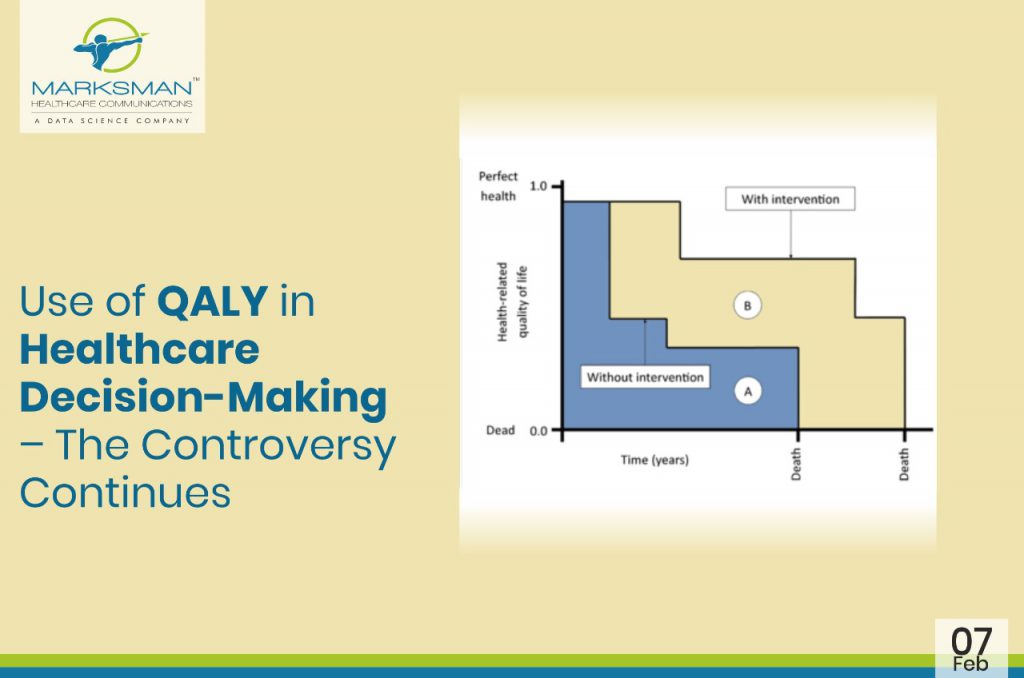
    In many parts of the world, the value of medicines is measured by a unit called ‘Quality-Adjusted Life Year’ (QALY), a metric that health economists and others use to quantify the health benefits generated by a particular treatment. QALYs are often used by state-run health systems in many countries to help decide which drugs to cover.

    QALYs measure the amount of time patients live after receiving a treatment, and the quality of their health. They provide a convenient yardstick for measuring and comparing health effects of varied interventions across diverse diseases and conditions. They represent the effects of a health intervention in terms of the gains or losses in time spent, in a series of “quality-weighted” health states. Some government-run health systems set rough caps on the amount, they are willing to pay per QALY.

    However, use of QALYs can be controversial, as some critics feel they amount to putting a price on life. Drug makers have been among the metric’s biggest critics and a few even opine that there are well-documented disadvantages of using QALYs to assess the value of a therapy. The 2010 Affordable Care Act explicitly bans the government from using a cost-per-QALY yardstick, or any similar measure, “as a threshold to determine coverage” under Medicare, a provision for which the pharmaceutical industry lobbies. Spain is the latest addition to the list, after Germany and USA, banning the use of QALY in healthcare decision making, after considering that this approach methodologically and ethically lacks robustness.

    The 2010 Patient Protection and Affordable Care Act (ACA) created a Patient-Centered Outcomes Research Institute (PCORI) to conduct comparative-effectiveness research (CER) but prohibited this institute from developing or using cost-per-QALY thresholds. The ACA specifically forbids the use of cost per QALY “as a threshold.” The precise intent and consequences of this language are unclear. One might interpret it to mean that the PCORI, or its contractors or grantees, can still calculate cost-per-QALY ratios as long as they are not compared with a threshold (e.g., $100,000 per QALY) or used to make a recommendation based on such a threshold. Comparisons of cost-per-QALY ratios across interventions could still be useful to decision makers even without the invocation of an explicit threshold. However, the ACA suggests a broader ban on the use of cost-utility analyses, which could eventually have a chilling effect on the field.

    When asked how they would like to allocate society’s health resources, researchers tend not to favor QALY “optimization” strategies. Instead, they tend to believe that equally ill people should have the same right to treatment, regardless of whether the treatment effect (that is, the QALY gain) is large. Moreover, QALYs do not distinguish the aggregation of modest benefits to large numbers of people from a substantial benefit going to a few people. QALYs might not adequately capture preferences about the amount of time experienced in a health state, or the order in which health states are experienced.

    Alternatives metrics to QALYs have been suggested, although all have limitations. Healthy-year equivalents (which measure preferences for life health profiles rather than discrete states) have been proposed, but their feasibility has been questioned, and the metric has not gained traction. Many health economists favor willingness-to-pay (WTP) metrics that involve asking people directly what they would be willing to pay for health improvements. However, such metrics require assigning monetary value to health benefits, which others find objectionable.

    Finally, analysts could simply calculate separately the costs and health consequences of different strategies (sometimes called “cost-consequences analyses”) and leave decision makers to decide if any particular treatment is “worth it.” However, the method would sidestep explicit discussions about value and provides no guidance for allocating resources fairly or efficiently across treatments. A number of government health authorities, including those in Australia, the United Kingdom, and Canada, have incorporated cost-effectiveness considerations explicitly into coverage and pricing decisions about drugs and other technologies. Although few currently require QALYs in economic evaluations, there is a clear preference for them in these and other countries. Hence, the flexible use of QALYs could be beneficial.

    Become a Certified HEOR Professional – Enrol yourself here!

  • Taking Patients as Partners in Research

    Taking Patients as Partners in Research

    The purpose of medicines is to improve patients’ lives. Despite the increasing number and scope of patient involvement initiatives, there is no accepted master framework for systematic patient involvement in pharma-led medicines development. Patient engagement is more productive, but inconsistent and fragmented on a broader level. Incorporating the patient perspective in healthcare research is strongly promoted by policy makers, funding bodies and international regulators. Many theoretical benefits from patient involvement in research have been reported, such as improving the relevance of research questions, improving the recruitment of study participants, and increasing the chances for funding and dissemination of results. In addition, there is an increasing recognition of the essential role of patients in outcome research.

    Patients have a personal experience of disease that is not available to most researchers, but that complements researchers’ analytical skills and scientific perspective. Patient or consumer involvement in research is therefore recommended, with theoretical benefits being that research grounded in relevant clinical need, patient perspectives, and patient priorities will enhance study design, practicality, recruitment, data interpretation, and dissemination. Patients can be involved in research by identifying and prioritizing topics, reviewing grant applications, analyzing and interpreting data, and disseminating findings. Involvement can mean consultation, collaboration, or consumer-led research.

    Involving patients in research projects improves both the methodology and outcomes of the research, and offers invaluable additional insights. Contributions by patients to the design, implementation and evaluation of research lead to effectiveness, credibility, and often to more cost efficiency as well. It is essential to ensure that high quality research brings real benefits for patients and their daily lives.

    Findings from these types of studies, where patients are considered partners, suggest that personal feedback from researchers as well as patients indicates that including the patient perspective in scientific projects is not easy. And although many people involved are convinced of the potential benefits of patient participation, they are still struggling with the question of ‘how to do it’.

    Patient involvement can only be successful if patients are sufficiently prepared and supported to make a valuable contribution. Not only do patients need adequate support, but researchers also need help with practical tools and information about the conditions that make patients’ participation worthwhile. The involvement of patients in research should be an active and equal engagement between patients and researchers right from the start of the project. Increasing number of studies are now being conducted involving patients in the research. For many reasons patient representatives are engaging with researchers to improve methodology and research outcomes, to give credibility to the results and to acknowledge the fact that for ethical reasons patients should have a say in health care and health research when it is expected that decisions in these areas will have an impact on their daily life. In the last decade patient involvement has been shown to be beneficial in different contexts of research. In particular, in the development of Patient Reported Outcomes, patients play a role in addition to that of study participants. They become collaborative partners in a process of co-production.

    Effective patient engagement is a time consuming process and significant investment. The research team and patient partners need to be open to the risks and be flexible in this work together. Mutual trust and integrity are key components to keep open conversation flowing and offer the possibility of allowing the patient voice to impact research studies, which can be incredibly valuable in providing end-use of research results. Future studies with a direct impact on patient-centered outcomes research would directly benefit from engagement with patients as full-team members in their research programs.

    Become a Certified HEOR Professional – Enrol yourself here!

  • Patient Preference Studies: Can They Replace RCTs?

    Patient Preference Studies: Can They Replace RCTs?

    While scientists, clinicians, and regulators play critical roles in understanding and communicating the benefits and risks of drugs/medical treatments, only patients live with their medical conditions and make choices regarding their personal care. They provide a unique voice and unique perspective. In recent years, more and more studies are focusing on patient reported outcomes (PROs). As a result, increasing number of patients are becoming aware of the healthcare outcomes perspective. However, the exact role of the PROs in understanding the patient-centered care is a little unclear.

    There come into existence the patient preference studies, which are a distinct class of methods being extensively used in medicine as they’re related to PROs, health related quality of life and the expected-utility methods used to motivate quality adjusted life years (QALYs). “Patient perspectives” refer to a type of patient input, and includes information relating to patients’ experiences with a disease or condition and its management. This may be useful for better understanding the disease or condition and its impact on patients, identifying outcomes most important to patients, and understanding benefit-risk tradeoffs for treatment. This guidance focuses on “patient preference information” as one specific type of patient perspective. Patient preference studies are far more grounded in economic theory and far more patient-centered but more importantly, they should be really flexible to capture interests of most of the outcome researchers.

    Patient preference studies can be designed in several ways; they can focus either on the total value of medical interventions; they can be used to evaluate hypothetical treatments; they can address issues of patient choice, and hence can be used to understand diseases like obesity, diabetes, and coronary-artery disease where long term prognosis depends directly on patient lifestyle choice; they can evaluate patient adherence or process-related aspects of healthcare. Therefore, patient preference studies can provide an alternative method for characterizing patients’ needs and wants. However, although they complement the randomized clinical trials, patient preference studies do not replace them. This is because more patients with treatment preferences in a trial may affect the randomization process and the absence of such patients may not provide generalizable results as participants may not be representative.

    Having said that, measuring patient preferences within a fully randomized design deserves further use as this conserves all the advantages of a fully randomized design with the additional benefit of allowing for the interaction between preference and outcome to be assessed. Furthermore, preference methods are flexible and adaptable to practically any health-related question and are thus suitable for quantifying the effect of treatment features on monetary valuations related to decision-making, risk-benefit tradeoffs, patient compliances, and other healthcare outcomes.

    The researchers must understand the importance of patients’ preferences while decision making. It is important to acknowledge that individual patient preferences may vary and that a patient may not assign the same values to various risks and benefits as his/her healthcare professional, a family member, regulator, or another individual. Furthermore, patient preferences may vary both regarding perspective on benefits and risks, as well as in preferred modality of treatment/diagnostic procedure (e.g., often devices are one option to be considered in a treatment care path, which may include surgery or medication). Some patients may be willing to accept higher risks to potentially achieve a small benefit, whereas others may be more risk averse, requiring more benefit to be willing to accept certain risks.

    It is clear that patient preference methods present an alternative method for characterizing patient needs and wants. Unlike PRO and/or HRQoL methods, the focus is on understanding the relative importance of attributes via revealed or stated preferences. Preference methods are flexible and adaptable to practically any health-related question and are thus uniquely suited to quantifying the effect of treatment features on adherence, the tradeoffs between health outcomes and other treatment features, the risk-benefit tradeoffs, and/or monetary valuations related to treatment options. Patient preference methods offer a scientifically rigorous alternative to traditional patient-centered outcomes research methods and are worth a closer look.

    Become a Certified HEOR Professional – Enrol yourself here!

  • Role of Social Media in PRO research

    Role of Social Media in PRO research

    ‘Patient’ should be considered as the centre for any healthcare system. There is growing realization for the patient-centered healthcare system. The outcomes of a clinical intervention obtained by the patient i.e. patient-reported outcomes (PROs) seemed to be of more importance in coming years than any other outcomes like clinical, physiological or caregiver-reported. The US Food and Drug Administration (USFDA) defines PRO as any report of the status of a patient’s health condition that comes directly from the patient, without interpretation of the patient’s response by a clinician or anyone else.

    Social media represents a brave new world for healthcare. Evidence from literature finds that healthcare organizations, clinicians and patients can benefit from the use of social media. For healthcare organizations, social media can be used primarily for community engagement activities such as fundraising, customer service and support, the provision of news and information, patient education, and advertising new services.

    As per the studies, enhanced treatment adherence and outcomes can be obtained by giving attention to patient feedback on healthcare outcomes and patient behavior change. In the western world, PROs are increasingly recognized as important tools in adding value to the drug review and evaluation process because they provide unique perspectives on medical conditions or their therapies that are known only to the patient. Under the auspices of marketing strategy, researchers are gleaning abundant personal information about patients through social media. Yet, physician-led research is slowly acclimating to this new approach to collect patient-reported data, although some investigators are increasingly open to new ways of collecting data through social media.

    Although PRO endpoints are still used in a minority of clinical trials, their use has grown in recent years; particularly in randomized Phase III trials. An analysis of global clinical trial registries shows that approximately 12% of the interventional trials registered by the pharma industry and over 15% of non-industry sponsored protocols now incorporate some form of PRO assessment. While for certain therapeutic areas (most notably, psychiatric disorders) PROs may be included in clinical trials as primary efficacy indicators, commercial use of PRO outcomes focuses predominantly on their employment as secondary endpoints designed to provide ‘added value’ data to support key biomedical endpoints. Moreover, by using PRO, various types of outcomes can be measured such as physical functions, symptoms, global judgments of health, psychological well-being, social well-being, cognitive functioning, role activities, personal constructs, satisfaction with care, health related quality of life (HRQoL), adherence to medical regimens and clinical trial outcomes. When it comes to diseases like cancer, it is important to determine the quality of life of the patient as patients with progression of cancer frequently experience multiple symptoms, economical burden, home management problems and lack of emotional well-being, all of which can adversely affect quality of life. PROs are helpful in the determination of quality of life in cancer patients.

    Patient-centered outcome research (PCOR) is still in infancy in India. Having said that, although today’s patients are more knowledgeable and empowered than those in the past, when it comes to the choice of the best treatment modality, many physicians in India do not take into account the patient preferences. Objectified measures of the effects of a particular intervention such as, patient’s laboratory values or clinician’s findings are given more importance than the patient-oriented, subjective measures. Therefore, during the decision-making process in the Indian healthcare delivery chain, more importance is given to what his treating clinician feels. This is in stark contrast to other commodities (such as automobiles, consumables, clothing, etc.) where the client’s preferences are given the top priority.

    Health care is moving towards a value-based system, where improving PROs such as, QoL- are benchmarks of good clinical practice. There is a gradual but real momentum in clinical research to use PROs, whenever possible. Industry can no longer rely on traditional pharmaceutical sales models alone, companies now certainly need to look into new forms of communication technology to demonstrate the value of products to a wider audience beyond the traditional physician pool. While a QoL label claim may be illusive in the current climate, the publication of an article demonstrating the benefits of a drug treatment based on data from a well developed PRO scale is likely to have a far reaching impact. The publication of data based on such PROs is likely to find its way onto social media and patient-web sites and such information is of interest to both patients and patient advocacy groups alike.

    The future of social media seems to have a good foundation in the healthcare industry to effectively change the standard face-to-face and paper-trail methods of health care delivery. While increasing public demand will continue to upgrade the provider-patient experience and patient-advocacy interface of social media, effective methods of collecting PROs, on the other hand, may require more systematic collective thinking and future consensus.

    Become a Certified HEOR Professional – Enrol yourself here!