• How India’s DISHA is Different from Global Patient Data Protection Laws?

    How India’s DISHA is Different from Global Patient Data Protection Laws?

    Currently, the data protection law in India is facing many issues due to the absence of proper legislative framework. The theft and sale of stolen data is happening across vast continents, where physical boundaries pose no restriction in today’s technologically advanced era. India, being the largest host of outsourced data processing in the world, could become the hotbed of cyber crimes; mainly owing to the lack of appropriate legislation. (1)

    To facilitate promotion/adoption of e-Health standards along with entailing privacy and security measures for electronic health data, regulation of storage, and exchange of electronic health records (EHRs); the Ministry of Health and Family Welfare, Govt. of India, is planning to enforce a ‘Digital Information Security in Healthcare Act’ (DISHA). The purpose of this act is to ensure electronic health data privacy, confidentiality, security and standardization, and to provide for establishment of ‘National Digital Health Authority’, Health Information Exchanges, and related matters. (2)

    The Centre has presented the draft of DISHA to ensure protection of health data that makes any breach punishable by up to five years imprisonment and a fine of Rs 5-lakh. This draft further states that any health data including physical, physiological and mental health condition, sexual orientation, medical records and history and biometric information are the property of the person who it pertains to. (2) This law will form the foundation for creating digital health records in India, as it will enable the digital sharing of personal health records with hospitals and clinics, and between hospitals and clinics. Reports also suggest that the National Health Policy approves the conception of a National Health Information Network, for sharing of Aadhaar linked Electronic Health Records. (3)

    What DISHA is all about? (2,3)

    As per the draft, the owners have the right to privacy, confidentiality, and security of their digital health data and the right to give or refuse consent for generation and collection of such data. Additionally, the owner of the data shall hold the rights to – i) give/refuse/withdraw consent for using this data, ii) data collection, iii) transparency, iv) rectification, v) sharing, vi) not to be refused health service if they refuse to give the consent for data use, and vii) protection.

    The required health data can be obtained by consent from the owner, thus informing him on the purpose of collection, identity of the recipients to whom the health data may be transmitted or disclosed, identity of the recipients who may have access to the data on a “need to know” basis. Also, proxy consent may be taken from a nominated representative, relative, care giver or such other person in case if an individual is incapacitated or incompetent to provide consent.

    All digital health data will be held by the clinical establishment or health information exchange on behalf of National Electronic Health Authority. The Act also lists down factors affecting data transmission as to who can transmit, how they can transmit and monitoring of data transmission. The Act further lists down the guidelines on accessing this data, with regards to who can access, how they can access, and purpose of data access by various entities. Moreover, the act also puts forth the implications of any breaches of digital data and the resulting penalties. A serious breach of this data is said to have occurred when the breach is intentional or repeated or its security not ensured as per the standards in the Act or if it is used for commercial gains.(4)

    Patient data protection laws in other countries!

    As India gears up to launch such data protection law, it may be enlightening to look at what other countries have enacted. In this context, the United States, China and the European Union have all taken drastically different directions. As stated earlier, data privacy involves getting consent from individuals before collecting their information, being transparent about why and how the information will be used, and deleting the information when it is no longer needed or when consent is withdrawn. Data protection involves taking adequate steps to protect data from accidental or malevolent leak. (5)

    The US is generally considered to have strong data privacy and protection laws (except one case in early 2017), although entangled in regulations and federal and state laws. Disclosure of health data is highly regulated at the federal level. Also, breach notification laws were pioneered in the US. The threat of legal action lawsuits compels companies to take measures to protect data and privacy. China also has multiple laws and regulations for data protection; wherein individual protections, such as requiring consent, protection of sensitive information, and limitation on use of data are provided. The latest Cybersecurity Law that rolled out on May 1, 2017 forbids people in China from using information networks to violate the privacy of others, using illegal methods to obtain personal data, and using their positions to acquire, leak, sell or share the same. In the European Union (EU), a new General Data Protection Regulation (GDPR) will be enforced starting 25th May 2018, which is expected to have a significant impact beyond the EU, because it applies to any organization that collects or processes data in the EU or from residents of the EU.5 After EU, Japan has also introduced a separate central legislation as the Act on the Protection of Personal Information (APPI) with an aim of data protection. The Act took partial effect in 2016 and has been enforceable from 30th May, 2017. Alike the EU regulation, consent of a data subject forms the essence of this legislation and has been stated as mandatory in case of transmitting data to a third party or for any use beyond communication purposes. (6)

    Amidst issues of data revelations and disclosure of personal information, India is in need of a formal legislation to uphold individual informational privacy and data protection. Internet and privacy rights supporters have demanded for such a law since long time, and the government has finally started taking steps towards this. DISHA is a result of these countless debates over data privacy issues and also, the need of the hour, i.e. protection of patient health data.  India, as a country, lags behind the world leaders when it comes to data protection. Therefore, we feel, DISHA (which is inviting public comments till 21st April) will lay the groundwork for many health exchanges while ensuring privacy and confidentiality of patient data. All we have to do now is wait and watch!

    Become an Certified HEOR Professional – Enrol yourself here!

    References 

    1. Khan MN. Does India have a Data Protection Law? Legal Service India.
    2. Government of India- Ministry of Health and Family Welfare (eHealth Section). Comments on Draft Digital Information Security in Health Care Act.(DISHA).. March 21st, 2018. 
    3. Pahwa N. Summary: Digital Information Security in Healthcare Act (DISHA) to enable electronic health records. March 29th, 2018. 
    4. Ghosh A. In draft digital health security law, 5-year jail term, Rs 5 lakh fine for data breach. March 27th, 2018.
    5. Kambampati S. What India’s data protection committee can learn from US, EU and China. October 3rd, 2017.
    6. Awasthi S. Data privacy: Where is India when it comes to legislation? August 24th, 2017.
  • Why pharmaceutical Companies are Prioritising Multi-Indication Drugs?

    Why pharmaceutical Companies are Prioritising Multi-Indication Drugs?

    Early stage drug candidates are increasingly being recognized to have potential applications in several therapy areas; especially in case of several diseases with a similar etiology. Illnesses associated with immunology, oncology and metabolic disorders might possibly be characterized by different physiological involvement while they share a similar underlying cause. (1)

    Several medicines currently available as well as many more in the pipelines are likely to be effective in multiple indications. More than half of the major cancer medicines currently in use have multiple indications. By 2020, this share is estimated to rise up to 75 percent with possibly varying prices. Since on-patent medicine prices justify their value, multi-indication medicines should have different prices across indications. Different prices for different indications or for individual patient sub-groups eligible for treatment with the same medication can be assigned with indication-specific pricing (ISP). The relative clinical benefits of a drug can vary widely between populations within the same indication. (2) However, the existing pricing and reimbursement systems are unprepared to handle this as there is still a uniform price across all indications. Thus, price and clinical value often do not align well across multiple indications. (3)

    This can be explained by an example of Enbrel (etanercept), which can be used in several inflammatory conditions, ranging from rheumatoid arthritis (RA) to moderate psoriasis. Since dosing regimens as well as the form of this medication are similar across indications, the product (and its competitors) is facing pricing challenge as the company has not been able to set difference prices for multiple indications. This can be attributed to restrictions on the use of Enbrel in RA and psoriasis, in terms of varying degrees of complications. Some companies have even received approvals for different brands of the same compound targeted for different indications. However, due to companies failing to differentiate the prices for such products, it is doubtful in today’s environment that payers would allow a price difference to stand. (4)

    A few of the current pricing models do allow for a “blended” pricing approach, which is still a uniform pricing; however, the price is based upon an average of the value of all of the indications, weighted by anticipated patient volumes. The challenge with such an approach is whether decision makers approve of the correct price to use when deciding about patient access to a particular indication. (3)

    Multi-indication pricing (MIP) method is used to set a different price for each indication approved for the medicine. This is to make sure that medicines are priced according to value per indication, in line with the standard economic theory when arbitrage does not prevent differential pricing. This may provide patients with an opportunity to access a medicine if priced as per the expected value for the potential outcomes achieved in that particular indication (usually expressed as a cost-effectiveness threshold). This way, companies will have an incentive to develop lower-value indications instead of high-value ones to sell at relevant (lower) prices, knowing that they can keep a high price for an existing high-value indication. (3)

    MIP administered through different brands of the same molecule is of little relevance for medicines with various oncology indications – which in itself is a big challenge. One country that has attempted this challenge is Italy, through the Agencia Italiana del Farmaco (AIFA) – which is responsible for monitoring drug usage across indications with patient registries for multi-indication, single-brand medicines. (3)

    Increasing number of researchers are finding promising therapies already developed for one disease that could help treat another. Many academics have found promise in inexpensive generics that have long been on the market whose patents have expired. Some companies in the hope of getting returns on their investments are also looking to repackage existing drugs still under patent, such as those that were shelved after unsuccessful trials. This is because resources have already been spent on these unapproved therapies, which is why companies see value in attempting to revamp them for a new indication. Most of such successful cases of drug repurposing have been largely appropriate discoveries. For instance, Sildenafil, sold as Viagra since 2005, was tested as a treatment for erectile dysfunction only after erections emerged as a side effect in Phase 1 trials for cardiovascular disease. Moreover, the antihypertensive Minoxidil was re-formulated into the topical cream Rogaine after patients experienced hair re-growth. Driven by these success stories, researchers are now taking more strategic approaches to identify new uses for existing and failed drugs, relying on new high-throughput techniques such as large-scale screens and bioinformatics strategies to mine data for drug-disease connections. (5)

    Become an Certified HEOR Professional – Enrol yourself here!

    References

    1. McConkey D, Wild L. Modelling the impact of multiple indication drug launch on total revenue. Value Health (PRM19) 2014; 11:A233-A510
    2. Pearson S, Dreitlein B, Henshall C. Indication-specific pricing of pharmaceuticals in the united states health care system – A Report from the 2015 ICER Membership Policy Summit. ICER: Institute for Clinical and Economic Review. March 2016
    3. Mestre-Ferrandiz J, Towse A, Dellao R, et al. Multi-indication Pricing: Pros, Cons and Applicability to the UK. Office of Health Economics: Seminar Briefing. 18th October 2015
    4. Kolassa EM. Pharma’s biggest pricing challenge. PM360. August 2012
    5. Azvolinsky A. Repurposing Existing Drugs for New Indications. The Scientist. January 2017
  • Facts & Fiction – Branded v/s Generic Controversy – India

    Facts & Fiction – Branded v/s Generic Controversy – India

    All branded drugs are of good quality – Fiction
    Majority of the branded drugs are of good quality – Fact

    All generic drugs are of good quality – Fiction
    Majority of the generic drugs are of good quality – Fact

    All pharma companies take pro-patient initiatives – Fiction
    Few pharma companies take pro-patient initiatives – Fact

    All doctors make their cut out of prescription – Fiction
    Majority of doctors make their cut out of prescription – Fact

    All pharmacists are qualified for their job– Fiction
    Few pharmacists are qualified for their job – Fact

    All MRs are qualified for their job– Fiction
    Few MRs are qualified for their job – Fact

    All patients look for affordability over quality – Fiction
    Majority of the patients look for affordability over quality – Fact

    Government dreams to take pro-patient initiatives – Fact
    Government’s steps to make them happen – no less than any fiction

    We all know where the double standards lie in every “Fact & fiction” mentioned above.

    Fact of irony is that inspite of India being the “Generic capital of the world”, patients are not able to afford healthcare. If it would have been all about patients:

    • Government must had central regulatory check on the quality of marketed generics
    • Pharma must not had followed unethical practices
    • Doctors must not had taken prescription cuts
    • Diagnostics must not had bribed doctors
    • Pharmacists must not had differentiated on various brands of same generic, and most importantly…

    “PATIENTS, WHO SHOULD BE IN THE CENTER OF HEALTHCARE SYSTEM, MUST HAVE KNOWN ABOUT THEIR DISEASE IN TOTALITY”

    Patient’s 3 desires in this order: – Hanno Wolfram on twitter

    1. learn what the diagnosis is
    2. learn what the disease does to them
    3. understand what to do against it

    Any patient engagement initiative has to anchor around these three patient needs!

    The million dollar question is who would like to take the responsibility first?

    Become a Certified HEOR Professional – Enrol yourself here!

  • Is India Gearing up for Patient Centric Healthcare Model?

    Is India Gearing up for Patient Centric Healthcare Model?

    Following the recent announcement by PM Narendra Modi hinting at a legal framework for doctors to prescribe generic medicines cheaper than equivalent branded generic drugs, doctors appeared to welcome the move and opined that it will benefit patients as the life-saving drugs could be obtained at much cheaper rates. (1,2)
    In reality, India being the largest supplier of generic medicines globally (20% of global export volume); the quality of the generics should not be an issue. Generic drugs dominate India’s pharmaceutical space, wherein generics account for about 70% of the market. Also, India accounts for approximately 30% (by volume) and about 10% (value) in the US$ 70-80 billion US generics market. Therefore, quality of the manufacturing has got nothing to do with branding. It is purely a manufacturer’s decision and ability enforced by law which is paid for by the customer. (3)

    However, PM Modi did attract the wrath of many following the announcement. This is because a lot of doctors questioned the accessibility and quality of the generic drugs. However, many feel this to be just an excuse, as doctors fear that this move would upset their nexus with the drug companies. (4,5) Furthermore, industry associations reaching out to the health ministry, hoping to approach the PMO to prevent the law from being passed, were opposing proposal on the grounds that the onus of decision-making (what patients should consume) would shift from doctors to chemists. This group further pointed out that the chemists are unregulated and have no ethical or commercial obligation on what they sell patients. However, the Ministry of Health and Family Welfare announced to seek only qualified candidates in the workforce. (6)

    Consequently, the health ministry has made bio-equivalence (BE) studies mandatory for all drug manufacturers before launching any generics in the market. This is primarily to guarantee the same quality and efficacy of generics as their branded counterparts. The health ministry has also issued a gazette notification to this effect. (7)

    Frankly, this move is worth applauding for, since it will ensure the quality as well as appropriate distribution of the generic drugs. This is because most of the doctors have been avoiding generic prescriptions in the name of lack of quality; while actually focusing on the incentives from the pharma marketing.iv On the other hand, in reality, prescribing generics would only benefit the patient in terms of both quality and affordability. But going by certain decisions the government has made since last couple of years, we can surely say that India has started accepting the patient-centric healthcare model.

    Big pharma players and even the smaller (generic manufacturers) ones need to think of ways to rebrand themselves. Certainly, not every company can manufacture a drug for every possible disease condition; however, the future of pharma business is predicted to go by branding based on robust ’therapy area’ leadership. For instance, Mylan Pharmaceuticals, the biggest generic drug manufacturers globally, has been manufacturing more Parkinson’s medicines than any other company in the world. (8) Furthermore, small players will have to invest money in proper and ethical ways of marketing, i.e. publishing results from BA/BE studies to prove the similar efficacy of generics with reference to their branded counterparts. (9)

    It has always been a patient-centric approach. The solution to all these complications is ‘patient empowerment’. Doctors primarily make diagnosis; they cannot polarize patients to earn their own incentives from the pharma players. Also, learned chemists/pharmacists should hopefully provide patients with cheaper generics. In the end, it is patients who must choose what is right for them.

    Become a Certified HEOR Professional – Enrol yourself here!

    References

    1. Chatterji S. Modi says govt will bring law to push doctors to prescribe generic medicines. Hindustan Times. April, 2017.
    2. PTI. PM Narendra Modi Hints At Rules For Doctors To Prescribe Generic Drugs. NDTV India.  April, 2017.
    3. Pharmaceutical Exports From India. India Brand Equity Foundation (IBEF). October, 2017.
    4. Pardasani S. Health for all: Not just Prime Minister’s call. Mumbai Mirror. April, 2017. Available at:
    5. Kaul R. Doctors welcome move to prescribe generic drugs, say accessibility may be an issue. Hindustan Times. April, 2017.
    6. Rajagopal D. `Chemists, and Not Doctors, Could Decide Brand of Drug Use’. The Economic Times. April, 2017.
    7. Thacker T. Health ministry warns on rushed implementation of generics plan. livemint. August, 2017.
    8. Mylan Receives FDA Approval for Generic Version of Parkinson’s Treatment Parcopa® ODT.
    9. Phukan RS. Generic drugs in India: More awareness required. November, 2014.
  • Use of QALY in Healthcare Decision-Making – The Controversy Continues

    Use of QALY in Healthcare Decision-Making – The Controversy Continues

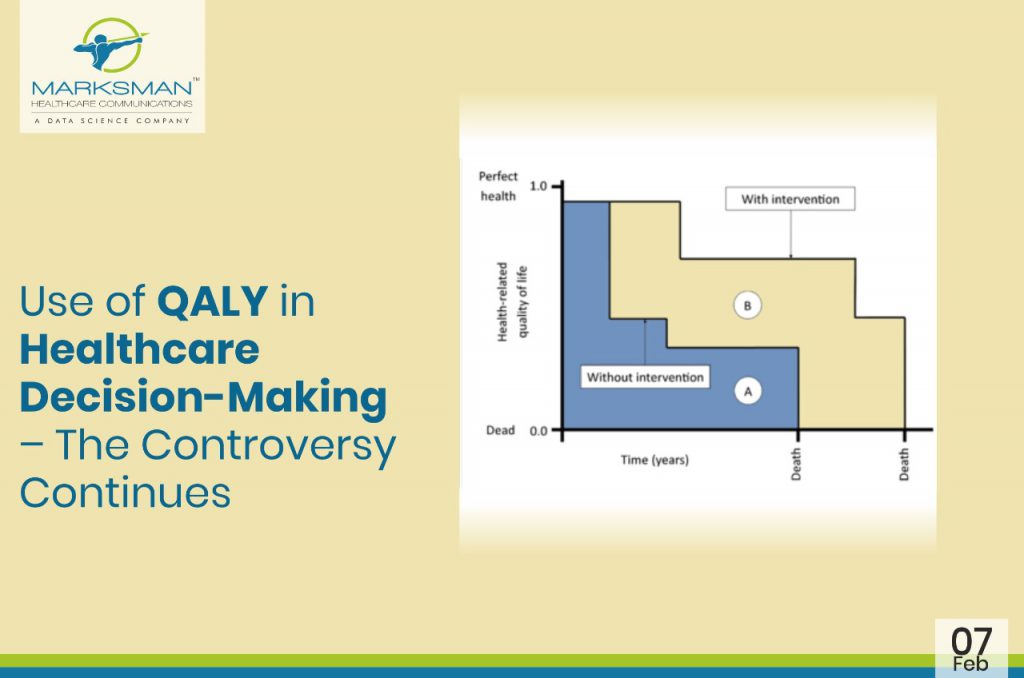
    In many parts of the world, the value of medicines is measured by a unit called ‘Quality-Adjusted Life Year’ (QALY), a metric that health economists and others use to quantify the health benefits generated by a particular treatment. QALYs are often used by state-run health systems in many countries to help decide which drugs to cover.

    QALYs measure the amount of time patients live after receiving a treatment, and the quality of their health. They provide a convenient yardstick for measuring and comparing health effects of varied interventions across diverse diseases and conditions. They represent the effects of a health intervention in terms of the gains or losses in time spent, in a series of “quality-weighted” health states. Some government-run health systems set rough caps on the amount, they are willing to pay per QALY.

    However, use of QALYs can be controversial, as some critics feel they amount to putting a price on life. Drug makers have been among the metric’s biggest critics and a few even opine that there are well-documented disadvantages of using QALYs to assess the value of a therapy. The 2010 Affordable Care Act explicitly bans the government from using a cost-per-QALY yardstick, or any similar measure, “as a threshold to determine coverage” under Medicare, a provision for which the pharmaceutical industry lobbies. Spain is the latest addition to the list, after Germany and USA, banning the use of QALY in healthcare decision making, after considering that this approach methodologically and ethically lacks robustness.

    The 2010 Patient Protection and Affordable Care Act (ACA) created a Patient-Centered Outcomes Research Institute (PCORI) to conduct comparative-effectiveness research (CER) but prohibited this institute from developing or using cost-per-QALY thresholds. The ACA specifically forbids the use of cost per QALY “as a threshold.” The precise intent and consequences of this language are unclear. One might interpret it to mean that the PCORI, or its contractors or grantees, can still calculate cost-per-QALY ratios as long as they are not compared with a threshold (e.g., $100,000 per QALY) or used to make a recommendation based on such a threshold. Comparisons of cost-per-QALY ratios across interventions could still be useful to decision makers even without the invocation of an explicit threshold. However, the ACA suggests a broader ban on the use of cost-utility analyses, which could eventually have a chilling effect on the field.

    When asked how they would like to allocate society’s health resources, researchers tend not to favor QALY “optimization” strategies. Instead, they tend to believe that equally ill people should have the same right to treatment, regardless of whether the treatment effect (that is, the QALY gain) is large. Moreover, QALYs do not distinguish the aggregation of modest benefits to large numbers of people from a substantial benefit going to a few people. QALYs might not adequately capture preferences about the amount of time experienced in a health state, or the order in which health states are experienced.

    Alternatives metrics to QALYs have been suggested, although all have limitations. Healthy-year equivalents (which measure preferences for life health profiles rather than discrete states) have been proposed, but their feasibility has been questioned, and the metric has not gained traction. Many health economists favor willingness-to-pay (WTP) metrics that involve asking people directly what they would be willing to pay for health improvements. However, such metrics require assigning monetary value to health benefits, which others find objectionable.

    Finally, analysts could simply calculate separately the costs and health consequences of different strategies (sometimes called “cost-consequences analyses”) and leave decision makers to decide if any particular treatment is “worth it.” However, the method would sidestep explicit discussions about value and provides no guidance for allocating resources fairly or efficiently across treatments. A number of government health authorities, including those in Australia, the United Kingdom, and Canada, have incorporated cost-effectiveness considerations explicitly into coverage and pricing decisions about drugs and other technologies. Although few currently require QALYs in economic evaluations, there is a clear preference for them in these and other countries. Hence, the flexible use of QALYs could be beneficial.

    Become a Certified HEOR Professional – Enrol yourself here!

  • Patient Preference Studies: Can They Replace RCTs?

    Patient Preference Studies: Can They Replace RCTs?

    While scientists, clinicians, and regulators play critical roles in understanding and communicating the benefits and risks of drugs/medical treatments, only patients live with their medical conditions and make choices regarding their personal care. They provide a unique voice and unique perspective. In recent years, more and more studies are focusing on patient reported outcomes (PROs). As a result, increasing number of patients are becoming aware of the healthcare outcomes perspective. However, the exact role of the PROs in understanding the patient-centered care is a little unclear.

    There come into existence the patient preference studies, which are a distinct class of methods being extensively used in medicine as they’re related to PROs, health related quality of life and the expected-utility methods used to motivate quality adjusted life years (QALYs). “Patient perspectives” refer to a type of patient input, and includes information relating to patients’ experiences with a disease or condition and its management. This may be useful for better understanding the disease or condition and its impact on patients, identifying outcomes most important to patients, and understanding benefit-risk tradeoffs for treatment. This guidance focuses on “patient preference information” as one specific type of patient perspective. Patient preference studies are far more grounded in economic theory and far more patient-centered but more importantly, they should be really flexible to capture interests of most of the outcome researchers.

    Patient preference studies can be designed in several ways; they can focus either on the total value of medical interventions; they can be used to evaluate hypothetical treatments; they can address issues of patient choice, and hence can be used to understand diseases like obesity, diabetes, and coronary-artery disease where long term prognosis depends directly on patient lifestyle choice; they can evaluate patient adherence or process-related aspects of healthcare. Therefore, patient preference studies can provide an alternative method for characterizing patients’ needs and wants. However, although they complement the randomized clinical trials, patient preference studies do not replace them. This is because more patients with treatment preferences in a trial may affect the randomization process and the absence of such patients may not provide generalizable results as participants may not be representative.

    Having said that, measuring patient preferences within a fully randomized design deserves further use as this conserves all the advantages of a fully randomized design with the additional benefit of allowing for the interaction between preference and outcome to be assessed. Furthermore, preference methods are flexible and adaptable to practically any health-related question and are thus suitable for quantifying the effect of treatment features on monetary valuations related to decision-making, risk-benefit tradeoffs, patient compliances, and other healthcare outcomes.

    The researchers must understand the importance of patients’ preferences while decision making. It is important to acknowledge that individual patient preferences may vary and that a patient may not assign the same values to various risks and benefits as his/her healthcare professional, a family member, regulator, or another individual. Furthermore, patient preferences may vary both regarding perspective on benefits and risks, as well as in preferred modality of treatment/diagnostic procedure (e.g., often devices are one option to be considered in a treatment care path, which may include surgery or medication). Some patients may be willing to accept higher risks to potentially achieve a small benefit, whereas others may be more risk averse, requiring more benefit to be willing to accept certain risks.

    It is clear that patient preference methods present an alternative method for characterizing patient needs and wants. Unlike PRO and/or HRQoL methods, the focus is on understanding the relative importance of attributes via revealed or stated preferences. Preference methods are flexible and adaptable to practically any health-related question and are thus uniquely suited to quantifying the effect of treatment features on adherence, the tradeoffs between health outcomes and other treatment features, the risk-benefit tradeoffs, and/or monetary valuations related to treatment options. Patient preference methods offer a scientifically rigorous alternative to traditional patient-centered outcomes research methods and are worth a closer look.

    Become a Certified HEOR Professional – Enrol yourself here!

  • EBM and HTA for Healthcare Decision Making – The Time has Come!

    EBM and HTA for Healthcare Decision Making – The Time has Come!

    Health systems have developed at different speeds, and with differing degrees of complexity throughout the twentieth century, reflecting the diverse political and social conditions in each country. Notwithstanding their diversity, all systems, however, share a common reason for their existence, namely the improvement of health for their entire populations. To attain this goal a health system undertakes a series of functions, most notably, the financing and delivering of health services.
    Since available resources are limited, delivering health services involves making decisions. Decisions are required on what interventions should be offered, the way the health system is organized, and how the interventions should be provided in order to achieve an optimal health gain with available resources, while, at the same time, respecting people’s expectations. Decision-makers thus need information about the available options and their potential consequences. It is now clear that interventions once thought to be beneficial have, in the light of more careful evaluation, turned out to be at best of no benefit or, at worst, harmful to the individual and counterproductive to the system. This recognition has led to the emergence of a concept known as “evidence-based medicine” (EBM), which argues that the information used by policymakers should be based on rigorous research to the fullest extent possible.

    Health technology assessment (HTA) increasingly plays an important role in informing reimbursement and pricing decisions and providing clinical guidance on the use of medical technologies across the world. In addition to safety and efficacy information, health economic and outcomes research (HEOR) data are also receiving expanded attention in these assessments in many countries, due to payers seeking better value for money spent on treatments. HTA is now commonly viewed as a tool to assist evidence-based health-care decisions.

    EBM has been defined as “the conscientious, explicit and judicious use of current best evidence in making decisions about the care of individual patients”. The origin of this evidence-based approach can be seen in the application of clinical medicine delivered at an individual level. Pressure to base decisions on evidence has, however, been extended to other areas of health care, such as public health interventions and health care policy-making. In this context, evidence is understood as the product of systematic observation or experiment. It is inseparable from the notion of data collection. The evidence-based approach relies mainly on research, that is, on systematically collected and rigorously analyzed data following a pre-established plan.

    There are exciting new developments in basic science that could lead to targeted, highly effective and curative treatments. Health systems are improving their electronic records and recording health outcomes, which can be analyzed using structured, sophisticated analyses in real-time. There are also new collaborative approaches between healthcare providers and technology developers to enable evaluation of technologies in the health system before adoption or early in adoption to optimize use. There is a need and an opportunity to harness these developments and improve the effectiveness and efficiency of evidence production for new health technologies to input to HTA and inform decision making. Clinicians, managers, patients, and technology developers need to be involved to ensure that the process to a coverage decision is not only efficient but that it is also effective. To be effective, health services need to be organized to enable rapid and appropriate introduction of effective technologies and disinvestment of ineffective technologies. This suggests an additional responsibility for HTA and it would involve helping technology developers understand clinical and patient needs, evidence generation requirements, and limitations and helping health systems understand the potential and implications of new technologies and possible challenges of implementation.

    Therefore, to sum everything up, the evidence should be both efficient as well as effective in order to develop more agile and adaptive processes that help to broker alignment among technology developers and health systems (including healthcare professionals and patients). This suggests that HTA needs to innovate and be prepared to play a more active role to influence evidence production and help facilitate dialogue among stakeholders to optimize technology development and use.

    Become a Certified HEOR Professional – Enrol yourself here!

  • Cost Effectivity or Affordability: What Should be Prioritized in India?

    Cost Effectivity or Affordability: What Should be Prioritized in India?

    Rapidly rising cost in healthcare is an increasing cause of concern across the world. Indian healthcare is also experiencing a change, with increasing focus on better quality of medical care services.

    As per the available information, the healthcare spending per capita per annum in India has been observed to be about $109, with total healthcare spending in the range of 4.9% of the country’s GDP. Most of the spending occurs from the private sector with public sector contributing to a mere $ 19 per capita per annum. Concurrently, the average spending per capita per annum in the United States during the same time frame has been found to be approximately $4271 whilst for the United Kingdom, the spending is $ 1675. These figures clearly indicate that healthcare in India is fairly cheaper, a strong reason for a growing medical tourism market in the country. However, when compared with paying power parity and affordability, the cost of medical care is escalating. It is worthwhile to note that as per World Bank estimates, more than 44% of Indian population earns less than one dollar a day.

    In India, a silent crisis in access to essential medicines confronts most patients who seek treatment of acute and chronic diseases. Close to 40% of Indians live on less than US $1 per day and most of them pay Out-Of-Pocket (OOP) for using healthcare. OOP spending in India is over four times higher than public spending on healthcare. Unexpected illness can have a catastrophic effect on the family of the ill person: direct out-of pocket payments could push 2.2%% of all healthcare users and one-fourth of all hospitalized patients, into poverty in a year.

    In addition, most Indians pay for medicines – a key factor that can contribute to the impoverishing effect of OOP payments for healthcare. According to the World Health Organization (WHO), an estimated 649 million people in India do not have regular access to essential medicines. Public provision of these medicines is poor; the median availability of 30 essential medicines in six states in India varied between 0% and 30%. Patients are forced to buy medicines from the private market, a compulsion that often spells calamity for those who can ill afford the twin burdens of sickness and healthcare costs.

    Drug regulatory agencies all over the world approve medicines for use in their countries on the basis of an evidence-based process which evaluates the data on their efficacy (obtained through randomized controlled trials) and safety. In India, in light of the public health problems that we face, the widespread poverty and high OOP expenditure incurred by patients, the drug regulatory authorities have an additional responsibility: to ensure that the medicines being approved for manufacture serve the public health needs of the country and are cost-effective. Moreover, patients value quality, safety and cost-effectiveness of a medicine; it matters little to them whether the medicine is branded or unbranded and whether it is promoted through the retailer or the doctor.

    India and its pharmaceutical industry have acquitted themselves very creditably on the global platform. Indian generics account for about 40% of the anti-retroviral medicines provided globally. Worldwide, these low-cost high-quality medicines are a lifeline to millions of people. There are an estimated 10,563 manufacturers in India, and more than 65,000 formulations. These numbers look impressive but the paradox is that, at home, large portions of the population lack access to even the most essential drugs. The limited funds available are frequently spent on ineffective or unnecessary medications. The money spent on overpriced medicines is very often also a waste of precious resources. Since these medicines outnumber those which are cost-effective, they directly impact the availability of and access to essential medicines.

    To address the anarchy of drug prices which is impoverishing people, we need a comprehensive cost-based system, and not the market-based system of price regulation. The drug approval system in India needs to be overhauled on the lines suggested by the recent parliamentary committee which looked into the functioning of the CDSCO. The process of drug approval needs to be rigorous, evidence-based, transparent, and in line with the interests of public health in India. The present predicament, of poverty of access to medicines amidst a plenty of overpriced, non-essential medicines which worsen poverty, should not be allowed to continue to imperil the lives and health of Indians.

    Become a Certified HEOR Professional – Enrol yourself here!