• How Integration of Multiple Data Sources can Improve Patient Insights?

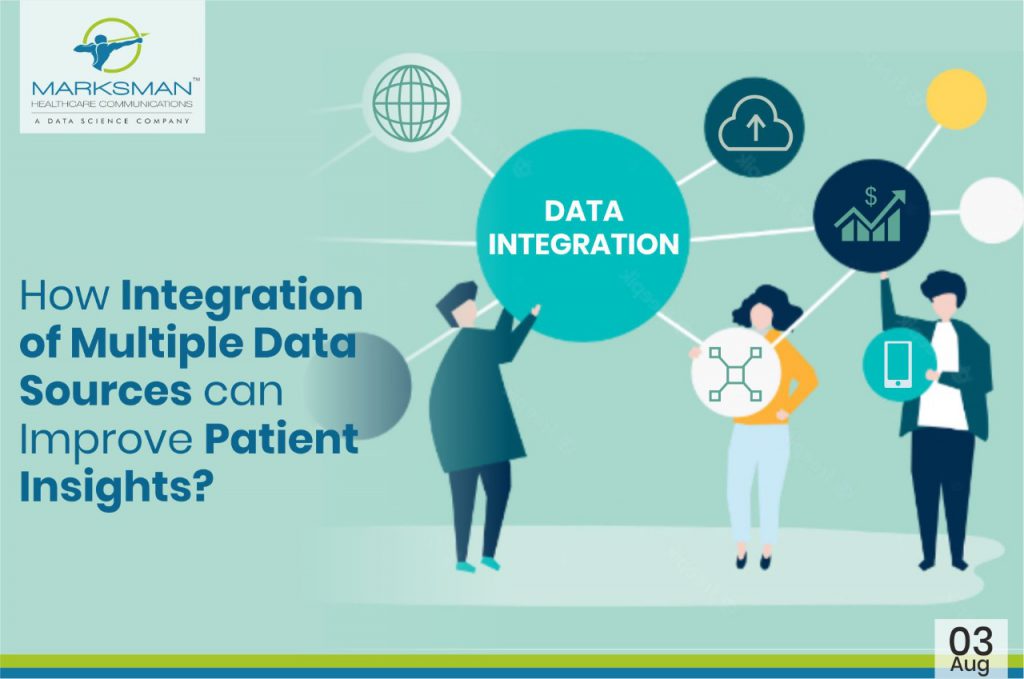
    How Integration of Multiple Data Sources can Improve Patient Insights?

    There are humungous quantities of data existing in healthcare; data from all kinds of sources, such as clinical, patient, payer, R&D, pharmacy as well as revolutionary technologies that are being quickly embraced, for e.g. data from wearable devices. According to a report by International Data Corporation (IDC), (1) the volume of healthcare data which was observed to be around 153 exabytes in 2013 is estimated to reach around 2,314 exabytes in the year 2020. Therefore, integrating data from all types of diverse sources and clinical systems is a fundamental challenge for any healthcare entity in order to enhance patient care and performance indicators. (2)

    It’s obvious that these huge amounts of health data are essential for betterment of both the cost as well as the quality aspects of care. Also, analyses of these data can provide significant insights for patients and researchers. However, methods to merge data from multiple formats and sources ranging across various systems used within clinics are still unclear. Data quality and accessibility provided by these systems can vary to a great extent. The healthcare industry has been traditionally observed to embrace new technologies; however, it lags behind while handling data, particularly data sharing and integration. To add to the practical challenges of data integration processes, compliance and capability to join forces with all the healthcare stakeholders also faces problems. As a consequence, data collection, storage, integration, and analysis make up for complicated processes. (2)

    There are some specific underlying concerns surrounding multiple, un-integrated data sources, viz. lack of broad view into enterprise-wide data as well as data standardization and governance, and matching patients to care events. Lack of broad view can impose challenges resulting in time consuming and expensive procedures during development of meaningful internal and external reports, like quality and patient safety regulatory and accreditation reporting. It may also hamper efforts to identify and prioritize opportunities to reduce costs, while improving care and patient experience. Lack of data standardization and governance can hamper performance of important analytics owing to multiple data sources, definitions and terms. Last but not the least, it is crucial to match patients accurately to their respective care events across multiple sites of care, which can be a complicated process. (3,4)

    There is no doubt that the Healthcare systems undoubtedly require effective data integration tools and greater level of flexibility when handling data, typically from multiple sources. The standards implemented in many countries recently have been intended for healthcare data integration and unification. For instance, in the USA the Health Information Technology (HITECH) Act (5) offers incentive payments to health care providers implementing certified EHR technology while showing meaningful use of that technology. HIPAA standards provide healthcare data protection; while HL7 standards allow clinical and administrative data communication between software applications used by various healthcare providers. (6)

    In order to gain patient insights, integration of data from multiple sources can prove to be beneficial. One way to facilitate data integration can be incorporating data warehouses [enterprise data warehouses (EDWs)], which can facilitate easy data mining in case of faster, major data initiatives. These methods can pull in and push out data with just one interface. Furthermore, data governance policies focusing on data standardization, advances in data reporting and further education and communication need to be in place in order to make changes in how data is to be collected, defined, and consumed. By integrating health data with financial and cost data to track patient encounters across multiple care locations and information systems, it is easier for health systems to compare patient quality and cost, i.e. comprehending the exact process of ‘value’ delivery. This insight is the difference between surviving and thriving in the new value based purchasing environment. (4)

    Clinical data integration from multiple sources can provide a wide-ranging perspective across care delivery systems. Health systems can easily carry out reporting while employing quality improvement initiatives, such as analytical care variation and measuring implementation of evidence-based guidelines. (4)

    To sum it all up, multiple data integration can obviously facilitate electronic exchange of information, while also reducing the costs and intricacies of building interfaces between different systems; thus proving valuable patient insights. The foundation of the healthcare industry’s data-sharing conundrum is data interoperability. Genuinely integrated systems must be easily understood by users, i.e. these systems must be able to exchange data and consequently put it forward through inclusive and user friendly interface.

    Become an Certified HEOR Professional – Enrol yourself here!

    References 

    1. Corbin K. How CIOs can prepare for healthcare ‘data tsunami’. December, 2014.
    2. Healthcare data integration: How to combine data from multiple sources. 
    3. Managing the integrity of patient identity in health information exchange. American Health Information Management Association. 2009. 
    4. Turning Data from Five Different EHR Vendors into Actionable Insights. Health Catalyst.
    5. Health Information Technology (HITECH Act). 2009. 
    6. Summary of the HIPAA Privacy Rule. 
  • How to Improve Healthcare Outcomes with Key Analytic Tools?

    How to Improve Healthcare Outcomes with Key Analytic Tools?

    Healthcare outcomes are defined as the changes observed and/or recorded in health status of individual or population patient/s usually due to an intervention, measures or specific healthcare investment. (1) The goal is to save the lives, shorten hospital stays and build healthier communities relying on preventative measures. (2) The fundamental steps of improving outcomes are measuring, reporting and analysing the outcomes. The efficient synthesis, organization and analysis of healthcare data offer the healthcare providers and other healthcare stakeholders with systematic and insightful treatment, measures and diagnosis. This may lead to higher patient care quality and better outcomes at lower costs.

    Healthcare industries generate a huge amount of information known as ‘big data’, driven by record keeping, compliance and regulatory requirement, potential to improve healthcare deliveries, and digitalization of historic data. (3) It include the clinical data from hospitals, clinics, pharmacies, pathological laboratories, diagnostic/imaging reports, healthcare insurances, and administrative data; individual patient data in electronic patient records (EPR) during various phases of clinical trials; pre-clinical data; hospitalization frequency data; research articles and reviews in scientific and medical journal; and information from various healthcare data resources; social media posts on different platforms; and less patient-specific information such as emergency care, news feed and healthcare magazines. (4) As per reports the data of U.S. alone may reach 1024 gigabyte soon. (3) There is need of rapidly transforming the volumes of aggregated healthcare data to value-based healthcare. 

    The analysis and assessment of huge healthcare data can be performed using advance platforms and tools with ability to handle structured, semi-structured or unstructured data. The data from random sources need to connect, match, cleanse and prepared for processing using three main steps of extract, transform and load. (4) The key platforms and tools to handle ‘big data’ are the Hadoop Distributed File System, MapReduce, PIG and PIG Latin, Hive, Jaql, Zookeeper, HBase, Cassandra, Oozie, Lucene, Avro, Mahout. (3) The analytic tools combine knowledge and data driven insights for identifying risks-factor and augmentation. These analytic tools have important applications for queries, reports, online analytical processing (OLAP) and data mining. (3) These analytic tools can search and analyse massive quantity of information from past treatments, latest published researches and healthcare databases to predict outcomes for individual patient. (5)

    Data analytic tools benefit all the components of healthcare system to improve healthcare outcomes. These components are healthcare service providers, patients, payers, stakeholders and managements. (6) Healthcare providers can develop new strategies and plan to care for patients such as reduce unnecessary hospitalizations and expenses. The patients at greatest risk of readmission can be identified and get guidance on follow ups for efficient resource utilization to save a huge amount of money spent each year on unnecessary hospitalization.

    The time gap always exists between a clinical event and the information to reach healthcare decision makers which could have bring the positive outcomes. The near real-time health surveillance can be performed using the information from social media blogs, micro-blogging on social networking sites such as Twitter and Facebook, and newspaper articles. (7) These social media networks provide information on the current locations by geo-tagged alerts. Real time analytic tools bring together the disparate information from various resources to the point of patient care, where the benefit can really be life-saving. It offers healthcare system access the most up-to date information. It realigns task based on priorities of healthcare providers, stakeholders, and insurers to improve healthcare outcomes. It addresses the gaps in care, quality, risk, utilization and regulatory requirement to support the improvements in clinical and quality outcomes; and financial performances. It provides a real-time report stating the real healthcare status of a patient and suggestions on improvement of the quality, achievement of compliance and realization of full reimbursement for their services. (8)

    It is often difficult for patients and clinician to keep the track of various healthcare organization-specific programs. The analytic tools may provide clinicians the information on a right program an eligible patient may enrol at a right time to help improve care and decrease costs. (8) The healthcare providers can assess patient-specific eligibility, gaps in care, risk scores, and historical medical information at the point of care which can be easily integrated into their existing operational model.

    The analytic tools improve healthcare outcomes by reducing the efforts and time required to handle ‘big data’ and conversion of volume to value-based information. These tools help encourage quality care to the patients benefitting payers as well as investors. The analytic tools would significantly support the advancement of medical and health science.

    Become an Certified HEOR Professional – Enrol yourself here!

    References

    1. Velentgas P., Dreyer N.A., and Wu W. A. (eds) Outcome Definition and Measurement. In ‘Developing a Protocol for Observational Comparative Effectiveness research: A User’s Guide’. Rockville,MD: Agency for Healthcare Research and Quality; AHRQ Publication No. 12(13)-EHC099, 2013.
    2. Kumar P. How real time analytics improves outcomes in healthcare. Published online on ‘IBM Cloud Blog’ dated June 19, 2017.
    3. Raghupathi W. and Raghupathi V. (2014). Big data analytics in healthcare: promise and potential. Health Information Science and Systems 2, 3
    4. Gandomi A., and Haider M. (2015). Beyond the hype: Big data concepts, methods, and analytics. International Journal of information Management 35, 137-144.
    5. Winters-Miner L.A. (2014) Seven ways predictive analytics can improve healthcare. Medical predictive analytics have the potential to revolutionize healthcare around the world. Published online on ‘Elsevier’s Daily stories for the science, Technology and health communities’ on Oct 06, 2014.
    6. Sun J. and Reddy C.K. (2013). Big data analytics for healthcare. Published in ‘KDD 2013 Proceedings of the 19th ACM SIAM International Conference on Knowledge Discovery and Data Mining’ held at Austin, TX, pg 1525-1525.
    7. Lee K., Agrawal A., and Choudhary A. (2013) Real-time disease surveillance using Twitter data: demonstration on flu and cancer. Published in ‘KDD 2013 proceedings of the 19th ACM SIGKDD international conference on knowledge discovery and data mining’, held at Chicago, Illinois, USA, pg 1474-1477.
    8. Rizzo D. The power of real-time analytics at the point of care. Published online on ‘Health IT Outcomes: Guest Column’ dated Dec 14, 2015.
  • What Happens When Financial Incentives Are Given To Promote Healthy Behaviour?

    What Happens When Financial Incentives Are Given To Promote Healthy Behaviour?

    Money drives human behavior so much so that it’s rarely thought about. Two-for-one or super-saver deals on anything right from movie tickets to clothing and other commodities compel the consumer and work–life choices; then why not health behavior? It’s a known fact that individuals smoke or drink less when the government increases tax on tobacco or alcohol. But do they react the same way when financial incentives are provided as part of targeted, personalized health promotion programs? (1)

    Many researchers are thinking of using financial incentives to encourage behavioral change. Incentive schemes offering payment and/or rewards are also used, not only to target school non-attendance, promote educational achievement, discourage crime; but also to encourage healthier choices. Furthermore, internationally, novel healthcare models are emerging that depend on financial incentives to encourage individuals to become more responsible for their health. (2,3)

    On the other hand, although people have incentives, both financial and health-related, to adopt healthy behaviors; they often fail to do so due to the intangible benefits that eventually result in decision errors. Hypothetically, giving financial incentives may compensate for these decision errors and encourage healthy behaviors. However, this approach is seldom used, often because of moral considerations, or due to the assumption that relapses will occur when the rewards are stopped. (4)

    Financial incentive programs are based on economic and psychological hypotheses about what contributes to human behavior; while the former assumes the financial benefit of adopting a healthier lifestyle to increase over the costs of making the change, and the latter offers a possibility of a reward for adopting a healthier lifestyle that might not be preferred by an individual. (1)

    A recent study, the largest to evaluate the effectiveness of financial incentives on HIV care-related behaviors, found that paying patients with HIV to keep their viral load under control by adhering to treatment- had the intended effect to a modest extent. This study demonstrated that financial incentives significantly increased by 3.8% of the proportion of patients with viral suppression at financial incentives compared with standard of care (SOC) sites. The effects observed were stronger in patients not consistently suppressed prior to the intervention. Financial incentives also substantially increased the proportion of patients reporting regularly for quarterly clinic visits. However, they did not have a significant effect on linking HIV- positive individuals to care, when compared with linkage at SOC sites. (5) Although incentivizing patients for treatment adherence may seem appalling, this may be a reasonable approach when current cost of medications are considered. Obviously, a formal cost-benefit analysis will need to allow for any costs saved by the reduced rate of HIV transmission and complications in those newly suppressed individuals. (5,6)

    We feel that, financial incentives are more practical and effective in restricted circumstances where the tasks are simple and time-bound, and less effective where the behavior change required is difficult. These incentives should be selectively applied to promote better use of health care services. Moreover, there is a possibility of these incentive programs rubbing some physicians in a wrong way – whether it’s a apprehension for fraud, or that efficacy will diminish over time, or that the same incentive won’t work on individuals of different means, or simply that paying people to do what they should be doing anyway seems wrong. Additionally, there is lack of evidence to make definitive conclusions about the conditions to make incentives effective. All these factors warrant for further research to understand at which stage the incentives will be most effective in encouraging the adoption of healthier behaviors and whether long-term incentive schemes can enable people to maintain changes in behavior. (1)

    Become an Certified HEOR Professional – Enrol yourself here!

    References

    1. Jochelson K. Paying the Patient- Improving health using financial incentives. King’s Fund (UK). December 2007.
    2. National Institute for Health and Clinical Excellence (NICE). Drug Misuse. Psychosocial management of drug misuse (draft for consultation). London: National Institute for Health and Clinical Excellence. 2007
    3. Kavanagh J, Trouton A, Harden A. A scoping review of the evidence for incentive schemes to encourage positive health and other social behaviors in young people. London: EPPI-Centre, Social Science Research Unit, Institute of Education, University of London. 2005
    4. Etter J-F. Financial incentives for smoking cessation in low-income smokers: study protocol for a randomized controlled trial. Trials 2012; 13:88.
    5. El-Sadr WM, Donnell D, Beauchamp G, et al. Financial Incentives for Linkage to Care and Viral Suppression Among HIV-Positive Patients: A Randomized Clinical Trial (HPTN 065). JAMA Internal Medicine 2017; 177(8):1083-1092.
    6. Wilson FP. HIV Patients Do Better with Viral Suppression When They’re Paid. Medpage Today: The Methods Man. June 2017
  • How Are Biobetters Different From Biosimilars?

    How Are Biobetters Different From Biosimilars?

    The biologics market is rapidly growing, at almost twice the rate of pharma industry. Estimates are such that 7 of the top 10 global medicines by spending will be a biologic within the next 5 years. To add to this, a new class of biologics, known as “biobetters”, is being introduced that could compete with biosimilars for market share. While the term “biosimilar” is used for a drug that is highly similar to its reference, with no clinically significant differences from the originator product, the term “biobetter” applies to a therapy resulting from intentionally altering a biologic product improving its clinical effects, requiring less frequent administration, or enhancing tolerability. (1)

    A biobetter is a recombinant protein drug from the same class as an existing biopharmaceutical but is not identical; it is superior to the original. (2) It isn’t exclusively a new drug, neither a generic version of a drug. Biosimilars and biobetters are both variants of a biologic; with the former being close copies of the originator, while the latter ones have been improved in terms of efficacy, safety, and tolerability or dosing regimen. (3)

    To cite an example, Roche’s Ado-trastuzumab Emtansine (Kadcyla), an antibody-drug conjugate, classifies as a biobetter of Trastuzumab (Herceptin, also developed by Roche), that has been reported to hinder disease progression in HER2-positive patients with advanced cancer. Another such product is Obinutuzumab (Gazyva), a biobetter of Rituximab with a different method of action, reportedly less immunogenicity, and greater cytotoxicity than Rituximab. Since these 2 biobetters seem to be superior to the originator biologics, the term is largely used for marketing. There is no regulatory pathway to prove that an altered biologic is “biobetter” than the innovator one, although guidelines are in place for demonstrating bio-similarity of molecules.(1)

    Regulatory authorities such as US FDA are authorized to develop approval pathways for biosimilars, but the process is complicated and must address many concerns. Some drug manufacturers, however, are opting to invest in the development of biobetters instead of waiting for the regulatory process to be completed. For instance, they can be targeted to improve pharmacodynamics in order to have less frequent dosing or reduced side-effect profiles or even sustained or slow release formulations. (2,3)

    Novel biobetters possibly will provide value to patients through improvements in ease, irrespective of their improved value over originators. For manufacturers, it is necessary to optimize the clinical trial program to ensure earlier market entry. In case of payers, the willingness to pay (WTP) for a biobetter will be directly proportional to its efficacy over the originator. Assigning irrelevant elevated cost for a biobetter cannot achieve the desired commercial success in a competitive market, unless it can be justified on more levels than just primary efficacy outcomes. In the biologics market, differentiation and not just innovation will play a role to command higher prices. (3)

    Biobetters can surely face commercial success since existing treatments are not perfect. However, market understanding and developing products that offer similarity or superiority in some clinical domains will be helpful. This can be achieved by paying attention to certain considerations, viz. identifying and addressing unmet needs by engaging with clinicians and payers, addressing non-responders to current treatment, i.e. focusing on patient sub-populations that may not be responding well, or well enough, to current standards of care. Finally, securing market access for a biobetter requires scanning the market landscape for competitor products. (3)

    Biobetters are more advanced originator biologics that potentially offer added benefits to patients as well as payers. Higher or fine pricing can obstruct patients gaining access to these ground-breaking treatments, which is why firms need to provide the right evidence and strategy to secure market access.

    Become an Certified HEOR Professional – Enrol yourself here!

    References

    1. Davio K. Will Biobetters and Biosimilars Compete for Market Share? The Center for Biosimilars. November 2017.
    2. Beck A, ed. Biosimilar, biobetter and next generation therapeutic antibodies. mAbs. 2011; 3(2):107-110.
    3. Wright J. Are biobetters better? July 2017. Accessed on 26th January 2018.
  • How to Elicit Expert Opinion to Understand Missing Health Outcomes?

    How to Elicit Expert Opinion to Understand Missing Health Outcomes?

    Missing data are a big concern in any research project and are often unavoidable in spite of investigators’ best efforts. Missing outcomes have two effects: reduced precision and power, and bias. Also, the loss of precision is inevitable, except the possible use of the available data; e.g. to be sure not to exclude from the analysis individuals who dropped out before the end of the study but who nevertheless reported intermediate values of the outcome. However, the statistician can aim to reduce bias through suitable choice of an analysis. (1)

    Randomized controlled trials (RCTs) typically have missing outcome data for some participants. Patient-reported outcomes (PROs) such as health-related quality of life (QoL) are mostly prone to missing data due to patients failing to complete follow-up questionnaires. Assumptions are often applied in case of statistical analyses for missing data to explicitly specify the values of the missing data: e.g. missing values being failures, as in smoking cessation trials. Other assumptions are inherent statements about the similarity of distributions, such as ‘last observation carried forward’. (1,2)

    In the primary trial analysis, an approach is often proposed which is valid under plausible assumptions for studies with the missing data. Instead of assuming that the data are ‘missing completely at random’ (MCAR), the primary analysis should suppose them to be ‘missing at random’ (MAR), i.e. the probability of missing data does not depend on the patient’s outcome, after conditioning on the observed variables (e.g. the patients’ baseline characteristics). However, the MAR assumption is unlikely to be used in many settings; for example, patients in relatively poor health are less likely to complete the requisite questionnaires, thus making the outcome data ‘missing not at random’ (MNAR). (2)

    The US National Research Council (NRC) report on missing data in clinical trials advocates sensitivity analyses for recognizing the data to be MNAR, in accordance with general methodological guidance for dealing with missing data and previous specific advice for intention-to-treat (ITT) analysis in RCTs. (3) On the other hand, systematic reviews show that in practice RCTs do not handle missing data appropriately. (4) Sensitivity analysis can be approached with either statistical modeling of parameters that represent outcome differences between individuals with complete versus missing data and/or exploring varying inferences with respect to the ‘sensitivity parameters’ assuming specific values. (5) The final output, i.e. results and conclusion, can then be compared over a reasonable range of values, possibly including a ‘tipping-point’ when results change. However, this approach does have a set of shortcomings. (2)

    An alternative is to allow experts to quantify their views. This is not only more intuitive and attractive for them, but it also considers a fully Bayesian approach and properly captures and reflects expert opinion (and associated uncertainty) about the missing data in the subsequent estimate of the treatment effect and its credible interval. This is particularly useful for those needing a quantitative summary of the trial, such as systematic reviewers, decision makers and health providers, as it provides a quantitative synopsis of interpretation of results by experts, given the missing data. When reviewing the study, experts will implicitly ‘fill in’ the gaps created by the missing data to arrive at their conclusions. The proposed elicitation approach, together with a Bayesian analysis, allows the study to comprehensibly quantify the impact of incorporating expert knowledge through to the estimates of treatment effectiveness.(1,2)

    Sensitivity analyses using Bayesian approach require practical tools for easier expert elicitation, and recent research focuses on elicitation approaches within group meetings. Group level elicitation has benefits for training and clarification and facilitates behavioral aggregation for achieving consensus. (6) However, because of the ‘feedback’ loop, these approaches are costly in both money and time. Thus, in many RCTs, it may not be viable to elicit opinion from a sufficient number and range of experts. Easier uptake of recommended approaches for sensitivity analysis for missing data within RCTs requires more accessible, practical tools for eliciting and synthesizing expert opinion to be developed and exemplified. (2)

    Using open source software like face-to-face or online ones to elicit beliefs from reasonably large number of experts without imposing an undue burden is one option that has been recently suggested. With this tool, the elicited views can be converted into informative priors for the sensitivity parameters in a pattern-mixture model which will allow for correlation in the elicited values across the trial arms. After this, the trial data can be re-evaluated under different MNAR assumptions to explore the robustness of the results. These methods, along with the expected level of loss to follow-up, could provide an improved estimate of the probable impact of missing data on the trial’s results. Therefore, this approach can significantly help improve trial design, so that the study results are more robust to anticipated levels of missing data.

    Become an Certified HEOR Professional – Enrol yourself here!

    References

    1. Jackson D, White IR, Leese M. How much can we learn about missing data?: an exploration of a clinical trial in psychiatry. Journal of the Royal Statistical Society Series A, (Statistics in Society). 2010; 173(3):593-612.
    2. Mason AJ, Gomes M, Grieve R, et al. Development of a practical approach to expert elicitation for randomized controlled trials with missing health outcomes: Application to the IMPROVE trial. Clinical Trials 2017; 14(4):357–367.
    3. Little RJ, D’Agostino R, Cohen ML, et al. The prevention and treatment of missing data in clinical trials. N Engl J Med 2012; 367(14):1355–1360.
    4. Bell ML, Fiero M, Horton NJ, et al. Handling missing data in RCTs; a review of the top medical journals. BMC Med Res Methodol 2014; 14:118.
    5. Little RJA. A class of pattern-mixture models for normal incomplete data. Biometrika 1994; 81(3):471–483.
    6. O’Hagan A, Buck CE, Daneshkhah A, et al. Uncertain judgments: eliciting experts’ probabilities. 1st ed. Hoboken, NJ: John Wiley & Sons, 2006.