• How Integration of Multiple Data Sources can Improve Patient Insights?

    How Integration of Multiple Data Sources can Improve Patient Insights?

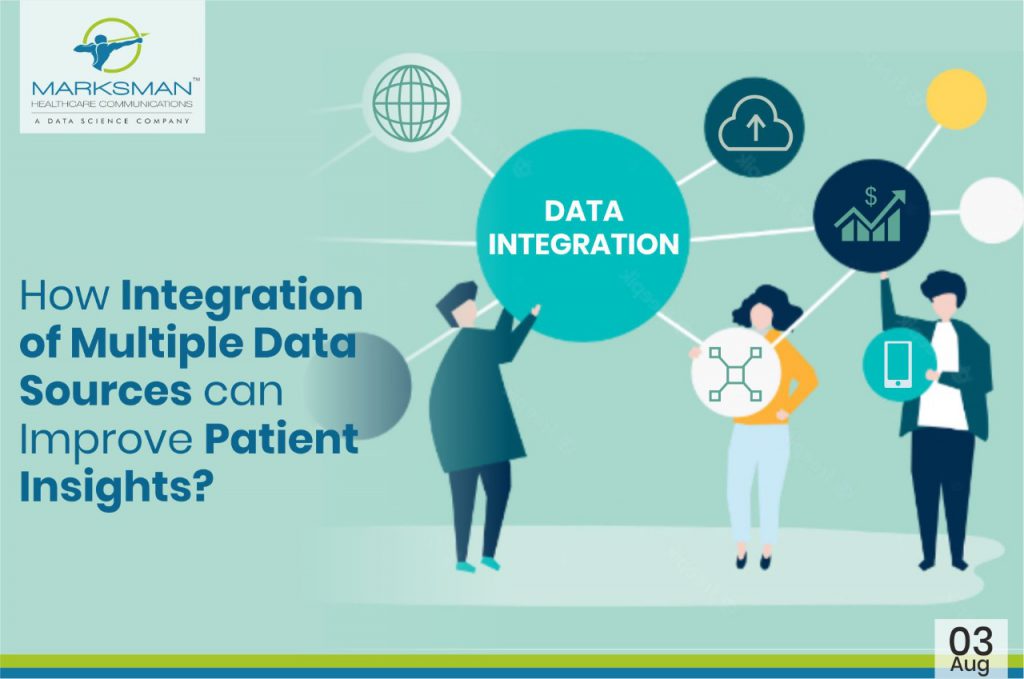
    There are humungous quantities of data existing in healthcare; data from all kinds of sources, such as clinical, patient, payer, R&D, pharmacy as well as revolutionary technologies that are being quickly embraced, for e.g. data from wearable devices. According to a report by International Data Corporation (IDC), (1) the volume of healthcare data which was observed to be around 153 exabytes in 2013 is estimated to reach around 2,314 exabytes in the year 2020. Therefore, integrating data from all types of diverse sources and clinical systems is a fundamental challenge for any healthcare entity in order to enhance patient care and performance indicators. (2)

    It’s obvious that these huge amounts of health data are essential for betterment of both the cost as well as the quality aspects of care. Also, analyses of these data can provide significant insights for patients and researchers. However, methods to merge data from multiple formats and sources ranging across various systems used within clinics are still unclear. Data quality and accessibility provided by these systems can vary to a great extent. The healthcare industry has been traditionally observed to embrace new technologies; however, it lags behind while handling data, particularly data sharing and integration. To add to the practical challenges of data integration processes, compliance and capability to join forces with all the healthcare stakeholders also faces problems. As a consequence, data collection, storage, integration, and analysis make up for complicated processes. (2)

    There are some specific underlying concerns surrounding multiple, un-integrated data sources, viz. lack of broad view into enterprise-wide data as well as data standardization and governance, and matching patients to care events. Lack of broad view can impose challenges resulting in time consuming and expensive procedures during development of meaningful internal and external reports, like quality and patient safety regulatory and accreditation reporting. It may also hamper efforts to identify and prioritize opportunities to reduce costs, while improving care and patient experience. Lack of data standardization and governance can hamper performance of important analytics owing to multiple data sources, definitions and terms. Last but not the least, it is crucial to match patients accurately to their respective care events across multiple sites of care, which can be a complicated process. (3,4)

    There is no doubt that the Healthcare systems undoubtedly require effective data integration tools and greater level of flexibility when handling data, typically from multiple sources. The standards implemented in many countries recently have been intended for healthcare data integration and unification. For instance, in the USA the Health Information Technology (HITECH) Act (5) offers incentive payments to health care providers implementing certified EHR technology while showing meaningful use of that technology. HIPAA standards provide healthcare data protection; while HL7 standards allow clinical and administrative data communication between software applications used by various healthcare providers. (6)

    In order to gain patient insights, integration of data from multiple sources can prove to be beneficial. One way to facilitate data integration can be incorporating data warehouses [enterprise data warehouses (EDWs)], which can facilitate easy data mining in case of faster, major data initiatives. These methods can pull in and push out data with just one interface. Furthermore, data governance policies focusing on data standardization, advances in data reporting and further education and communication need to be in place in order to make changes in how data is to be collected, defined, and consumed. By integrating health data with financial and cost data to track patient encounters across multiple care locations and information systems, it is easier for health systems to compare patient quality and cost, i.e. comprehending the exact process of ‘value’ delivery. This insight is the difference between surviving and thriving in the new value based purchasing environment. (4)

    Clinical data integration from multiple sources can provide a wide-ranging perspective across care delivery systems. Health systems can easily carry out reporting while employing quality improvement initiatives, such as analytical care variation and measuring implementation of evidence-based guidelines. (4)

    To sum it all up, multiple data integration can obviously facilitate electronic exchange of information, while also reducing the costs and intricacies of building interfaces between different systems; thus proving valuable patient insights. The foundation of the healthcare industry’s data-sharing conundrum is data interoperability. Genuinely integrated systems must be easily understood by users, i.e. these systems must be able to exchange data and consequently put it forward through inclusive and user friendly interface.

    Become an Certified HEOR Professional – Enrol yourself here!

    References 

    1. Corbin K. How CIOs can prepare for healthcare ‘data tsunami’. December, 2014.
    2. Healthcare data integration: How to combine data from multiple sources. 
    3. Managing the integrity of patient identity in health information exchange. American Health Information Management Association. 2009. 
    4. Turning Data from Five Different EHR Vendors into Actionable Insights. Health Catalyst.
    5. Health Information Technology (HITECH Act). 2009. 
    6. Summary of the HIPAA Privacy Rule. 
  • Best Practices for Protecting Privacy While Conducting Big Data Analytics

    Best Practices for Protecting Privacy While Conducting Big Data Analytics

    The concept of “Big Data” is #trending today, which is characterized by types of data sources with huge quantities, high speed and broad diversity of information. Healthcare industries are trying to apply Big Data analytics to reform data into a workable platform in order to generate information that would help making better and faster clinical decisions, such as reduced readmissions, scaling down hospital-associated illnesses, identifying and eliminating waste, improved clinician workflow etc. Government and the private sectors are taking in Big Data to enable better, quicker and more valuable care delivery to people. (1)

    With rising discussions about Big Data, artificial intelligence, and related techniques in health care, the need for the appropriate and more importantly, ethical use of these methods is becoming increasingly relevant. (1) Privacy and confidentiality associate closely with each other. Data privacy talks about the rights of individuals to maintain control over their own health information; while confidentiality is the responsibility of entities handed over with those data to maintain privacy. (2) Concerns of data privacy and confidentiality hamper their scope, proper storage, accessibility, and propagation, particularly in case of highly sensitive or personal data. The ever expanding scope of data collection, storage and analysis (3,4), further add to the risk of data privacy infringements. (5,6) In addition, data anonymity does not ensure against individuals’ identity subsequently through the joining of data sets and re-identification, (7) data manipulation and discrimination, (8) or other inappropriate ways of data uses. (9) Therefore, protected management of patient data is necessary, since healthcare clouds link large amounts of data from disparate networks. (10)

    There are several factors of privacy and security that must be taken into consideration while using Big Data analytics for healthcare. For instance, although it has the potential to provide an understanding on the huge volumes of heterogeneous data, challenges arise with respect to potential security and privacy breaches; which, as a result, hinder the process of appropriately accessing the value held within the data. (11)

    Big Data platform must embrace multiple layers of security for data at rest and the data in flight. All communications between data sources, data consumers and the Big Data warehouse should be encrypted to provide security to the data. There are some methods that can be applied to ensure data security in Big Data analytics. A traditional method to prevent the confidential information disclosure by de-identifying, i.e. rejecting any information that can identify the patient, either by removing specific identifiers of the patient or by the second statistical method, where the patient verifies himself that enough identifiers are deleted. The traditional method can be enhanced with the help of concepts like k-anonymity, l-diversity and t-closeness. Moreover, hybrid execution model ensures confidentiality and privacy in cloud computing by utilizing public clouds only in case of non-sensitive data and computation classified as public; i.e., when the organization declares no privacy and confidentiality risk in exporting the data and performing computation on it using public clouds. While it uses private cloud in case of sensitive, private data and computation, some techniques do apply identity-based anonymization. However, due to increased complexity as well as several limitations, these models need to undergo further research and tests as they are getting more difficult to interpret and less reliable. (12)

    Patient data security and privacy are crucial in driving the healthcare transformation. With Big Data in healthcare becoming more omnipresent with cloud computing, the host companies will be more reluctant to share massive healthcare data for centralized processing. Hence, distributed processing across different clouds and pulling up on cumulative intelligence is foreseen.

    The extreme sensitivity of healthcare data makes their confidentiality and integrity crucial. Therefore, in healthcare, Big Data security is fundamental. Additionally, to provide the best care, healthcare providers must have quick, but secure, access to a patient’s medical history. Security solutions should ensure protecting analytics and securing Big Data frameworks. Laying out the right technical foundation is a precondition for successful data analysis.

    Become an Certified HEOR Professional – Enrol yourself here!

    References 

    1. Balthazar P, et al. Protecting Your Patients’ Interests in the Era of Big Data, Artificial Intelligence, and Predictive Analytics.  J Am Coll Radiol 2018; 15(3 Pt B):580-586.
    2. Centers for Disease Control and Prevention. Emergency preparedness for older adults; HIPAA, privacy and confidentiality. Available at:
    3. Mittelstadt BD, et al. The ethics of big data: current and foreseeable issues in biomedical contexts. Sci Eng Ethics 2016; 22:303-41.
    4. Nunan D, et al. Market research and the ethics of big data. Int J Mark Res 2013; 55:505-20.
    5. Andrejevic M. The big data divide. Int J Commun 2014;8:17.
    6. Puschmann C, Burgess J. Metaphors of big data. Int J Commun 2014;8:20.
    7. Choudhury S, et al. Big data, open science and the brain: lessons learned from genomics. Front Hum Neurosci 2014; 8:239
    8. Crawford K. The hidden biases in big data. Harvard Business Review. Available at: https://hbr.org/2013/04/the-hidden-biases-in-big-data.
    9. Tene O, et al. Big data for all: privacy and user control in the age of analytics. Nw J Tech Intell Prop 2012; 11:xxvii.
    10. Patil HK, e al. Big data security and privacy issues in healthcare. Nanthealth: Dallas, US. 
    11. [11] Rao S, et al. Security solutions for big data analytics in healthcare. Second International Conference on Advances in Computing and Communication Engineering – IEEE, 2015. 
    12. Abouelmehdi K, et al. Big data security and privacy in healthcare: A Review. Procedia Computer Science 2017; 113:73-80.
  • Forecasting the Analytics Landscape to Anticipate Future Patient Requirements

    Forecasting the Analytics Landscape to Anticipate Future Patient Requirements

    There is heaps-full of data existing in the healthcare domain that has been generated historically, by means of record keeping, compliance & regulatory requirements, and patient care. (1) The current trend suggests faster digitization of this large amount of data, known as ‘Big Data’, that have been stored as hard copies over time. Big Data can facilitate a wide range of medical and healthcare functions, such as clinical decision support, disease surveillance, and population health management; with primary goals of providing better quality of healthcare delivery as well as reducing the costs. (2,3)

    Big data are often identified by 5V’s in terms of Volume, Velocity, Variety, Value, and Veracity. The patient data collected often amount to peta or zeta bytes in volume. The speed and rate at which data is received from the patients explains the velocity. The miscellaneous data sets classified as the structured, semi-structured and unstructured data sets like clinical reports, EHRs, and radiological images represent variety; whereas veracity is when the true and reliable data sets with accessible and genuine data are provided. The collected data are transformed to provide meaningful understanding, thus explaining their significance in 5V’s. (4)

    While multiple discussions on healthcare data are focusing excessively on probable risks and misuses of the data, there are also enormous profits from extending healthcare data usage. A whole host of use cases are available to prove the widespread value being created by data analytics, across all stakeholders of the healthcare system, including patients, healthcare professionals and providers, payers, researchers, biopharmaceuticals and medical device companies, and regulatory authorities. Patient and healthcare associations in the past, while discussing the big data applications, have focused on the potential risks linked to exploitation of personal health records (such as predictions of individual or family health risks). Progressively, however, patients are accepting the countless benefits of data analytics, while still being vigilant about possible risks linked to data misuse. (5)

    Data analytics, in conjunction with latest technologies, can help healthcare providers expand care pathways and services “beyond their walls”. For example, new measurement devices (such as wearable, ingestible or implantable sensors) can convey data that will prompt a provider to determine patient crisis. For instance, a provider can foresee and avert any complications like diabetic foot and evade amputation by monitoring vital signs in diabetic patients. In psychiatric or neurological patients, accurate supervision of a combination of indicators can provide better certainty of a crisis. Growing number of continuous monitoring services that rely remarkably on connected objects and data analytics are already altering care paradigm for chronic patients. Examples of these include Bioserenity solutions for epilepsy, Ginger.io for chronic conditions, several congestive heart failure programs being undertaken worldwide, or Diabeo for individualized insulin dosing.(5)

    As we can see, data analytics has the potential to put together predictive models and categorize patients based on the probable/future healthcare risk they might carry, in order to modify treatment protocols to their profile. These models are crucial in deciding the success of disease management programs. With increasing digital technologies, life sciences and healthcare are on the verge of a revolution. Continuous improvement in the global and quick analysis methods, initiated with genome sequencing, along with the increasing digitization of vast information, now creates substantial quantity of data. The exploitation and analysis of these big data create new prospects, while also helping address technological, scientific and medical challenges.

    Become an Certified HEOR Professional – Enrol yourself here!

    References

    1. Raghupathi W. Data Mining in Health Care. In: Kudyba S, editor. Healthcare Informatics: Improving Efficiency and Productivity. 2010. pp. 211–223.
    2. Burghard C. Big Data and Analytics Key to Accountable Care Success. 2012.
    3. Fernandes L, O’Connor M, Weaver V. J AHIMA. 2012. Big data, bigger outcomes; pp. 38–42.
    4. Sahoo PK, et al. Analyzing Healthcare Big Data With Prediction for Future Health Condition. IEEE 2017; 4:9786-9799.
    5. Unlocking the full potential of data analytics for the benefit of all. Healthcare Data Institute. November, 2015. 
  • Importance of Tapping Payer’s Data to Document the Effect of a New Therapy

    Importance of Tapping Payer’s Data to Document the Effect of a New Therapy

    Traditionally, the pharmaceutical industry has always been dependent upon the ‘push’ strategy for successful market access for products. The drug approval process, involving submission of data on efficacy, safety, and tolerability to the regulatory agencies, used to be simple; which ended with the drug being marketed to the targeted physicians and dispensed by pharmacies post approval. Thus, this whole process involved a limited set of stakeholders, viz. physicians, regulatory agencies, and pharmacies. Conversely, over the years, the market access landscape has evolved primarily due to two factors: (1)
    1. Rising healthcare costs owing to an increasing prevalence of chronic diseases, growing geriatric population, and higher prices of new therapies
    2. Competitive pricing and reimbursement environment

    This has further led to the emergence of a new and diverse set of stakeholders over the years, i.e. the ‘Payer’(s), increasing the complexity of drug access to the market in general, and to patients in particular. Payer exercises the greatest degree of control over pricing and reimbursement for any new drug, and will continue to dominate the market access scenario to ensure successful market access. (2,3)

    Pharmaceutical advancements are increasingly conflicting as countries attempt to accommodate healthcare costs via different tools. New criteria for recognizing unique drugs and differences among those within the same therapeutic area or concerning the same molecule are being introduced, even though ‘price’ remains the main driver. (4) There is a surge of criticism towards the increasing prices of drugs that adds growing pressure on pharma companies and manufactures to limit future price increases, and eventually on payers to be more cost-effective in their approach to setting budgets and managing costs. (5) Global pharma operations need to keep up with the pace of these changes to approach pharma tendering as a strategy that spans pricing and commercialization.

    In order to document the effect of a new therapy in the real world, pharma companies are trying to justify prices by tapping payer’s data. Payers encourage pharma to collect post-launch evidence of product performance in the real world, thus turning it in pharma’s favor. This can help verify a price agreement or even clarify uncertainties about the clinical and/or safety outcomes outlined at registration. (6)

    The successful market access will involve collaborative team work between sales and marketing departments. The strategy itself should be well equipped to respond to market evolution and also, to accommodate all known interactions. There is no ‘one-size-fits-all’ solution. The challenges in the market will constantly vary as per the product, therapy area and the setting in which the treatment will be used.i,vi

    Payers are increasingly focusing on “real-world” outcomes to form their decisions, encouraging new policies to be formed, in order to assimilate evidence from different sources. These policies prioritize the evidence that goes beyond information collected during clinical development in randomized controlled trials (RCTs), required by regulatory authorities for marketing approval. ‘Administrative data’- that normally use retrospective or real-time patient data – are an example of the real world data sources, as they are collected primarily for reimbursement, but contain some clinical diagnosis and procedure use with detailed information on charges. Retrospective analyses (longitudinal and cross-sectional) of clinical and economic outcomes at patient, group, or population levels can be performed with the help of claims databases. Such analyses can be performed in short time and at low costs. (7)

    In conclusion, payer data from real-world such as claims data can most certainly impact the sound coverage, payment, and reimbursement decisions. It is critical that payers recognize – a) the benefits, limitations, and methodological challenges in using these data, and b) the need to carefully consider the costs and benefits of different forms of data collection in different situations.

    Become an Certified HEOR Professional – Enrol yourself here!

    References

    1. Kumar A, et al. Pharmaceutical market access in emerging markets: concepts, components, and future. Journal of Market Access & Health Policy 2014; 2:10.3402/jmahp.v2.25302.
    2. McClearn C, et al. Big pharma’s market access mission. Deloitte University Press; 2013.
    3. Arx RV, et al. Leveraging success factors for market access in the life sciences industry. Capgemini Consulting and Cegedim dendrite; 2009.
    4. Skinner JS. The costly paradox of healthcare technology. September, 2013. 
    5. Pharmaceutical pricing and market access 2017.
    6. Wechsier J. Measuring the value of prescription drugs. Pharmaceutical Executive 2017; 37(5).
    7. Garrison LP Jr. Using real-world data for coverage and payment decisions: The ISPOR Real-World Data Task Force Report. Value Health 2007; 10(5):326-225.
  • How to Improve Healthcare Outcomes with Key Analytic Tools?

    How to Improve Healthcare Outcomes with Key Analytic Tools?

    Healthcare outcomes are defined as the changes observed and/or recorded in health status of individual or population patient/s usually due to an intervention, measures or specific healthcare investment. (1) The goal is to save the lives, shorten hospital stays and build healthier communities relying on preventative measures. (2) The fundamental steps of improving outcomes are measuring, reporting and analysing the outcomes. The efficient synthesis, organization and analysis of healthcare data offer the healthcare providers and other healthcare stakeholders with systematic and insightful treatment, measures and diagnosis. This may lead to higher patient care quality and better outcomes at lower costs.

    Healthcare industries generate a huge amount of information known as ‘big data’, driven by record keeping, compliance and regulatory requirement, potential to improve healthcare deliveries, and digitalization of historic data. (3) It include the clinical data from hospitals, clinics, pharmacies, pathological laboratories, diagnostic/imaging reports, healthcare insurances, and administrative data; individual patient data in electronic patient records (EPR) during various phases of clinical trials; pre-clinical data; hospitalization frequency data; research articles and reviews in scientific and medical journal; and information from various healthcare data resources; social media posts on different platforms; and less patient-specific information such as emergency care, news feed and healthcare magazines. (4) As per reports the data of U.S. alone may reach 1024 gigabyte soon. (3) There is need of rapidly transforming the volumes of aggregated healthcare data to value-based healthcare. 

    The analysis and assessment of huge healthcare data can be performed using advance platforms and tools with ability to handle structured, semi-structured or unstructured data. The data from random sources need to connect, match, cleanse and prepared for processing using three main steps of extract, transform and load. (4) The key platforms and tools to handle ‘big data’ are the Hadoop Distributed File System, MapReduce, PIG and PIG Latin, Hive, Jaql, Zookeeper, HBase, Cassandra, Oozie, Lucene, Avro, Mahout. (3) The analytic tools combine knowledge and data driven insights for identifying risks-factor and augmentation. These analytic tools have important applications for queries, reports, online analytical processing (OLAP) and data mining. (3) These analytic tools can search and analyse massive quantity of information from past treatments, latest published researches and healthcare databases to predict outcomes for individual patient. (5)

    Data analytic tools benefit all the components of healthcare system to improve healthcare outcomes. These components are healthcare service providers, patients, payers, stakeholders and managements. (6) Healthcare providers can develop new strategies and plan to care for patients such as reduce unnecessary hospitalizations and expenses. The patients at greatest risk of readmission can be identified and get guidance on follow ups for efficient resource utilization to save a huge amount of money spent each year on unnecessary hospitalization.

    The time gap always exists between a clinical event and the information to reach healthcare decision makers which could have bring the positive outcomes. The near real-time health surveillance can be performed using the information from social media blogs, micro-blogging on social networking sites such as Twitter and Facebook, and newspaper articles. (7) These social media networks provide information on the current locations by geo-tagged alerts. Real time analytic tools bring together the disparate information from various resources to the point of patient care, where the benefit can really be life-saving. It offers healthcare system access the most up-to date information. It realigns task based on priorities of healthcare providers, stakeholders, and insurers to improve healthcare outcomes. It addresses the gaps in care, quality, risk, utilization and regulatory requirement to support the improvements in clinical and quality outcomes; and financial performances. It provides a real-time report stating the real healthcare status of a patient and suggestions on improvement of the quality, achievement of compliance and realization of full reimbursement for their services. (8)

    It is often difficult for patients and clinician to keep the track of various healthcare organization-specific programs. The analytic tools may provide clinicians the information on a right program an eligible patient may enrol at a right time to help improve care and decrease costs. (8) The healthcare providers can assess patient-specific eligibility, gaps in care, risk scores, and historical medical information at the point of care which can be easily integrated into their existing operational model.

    The analytic tools improve healthcare outcomes by reducing the efforts and time required to handle ‘big data’ and conversion of volume to value-based information. These tools help encourage quality care to the patients benefitting payers as well as investors. The analytic tools would significantly support the advancement of medical and health science.

    Become an Certified HEOR Professional – Enrol yourself here!

    References

    1. Velentgas P., Dreyer N.A., and Wu W. A. (eds) Outcome Definition and Measurement. In ‘Developing a Protocol for Observational Comparative Effectiveness research: A User’s Guide’. Rockville,MD: Agency for Healthcare Research and Quality; AHRQ Publication No. 12(13)-EHC099, 2013.
    2. Kumar P. How real time analytics improves outcomes in healthcare. Published online on ‘IBM Cloud Blog’ dated June 19, 2017.
    3. Raghupathi W. and Raghupathi V. (2014). Big data analytics in healthcare: promise and potential. Health Information Science and Systems 2, 3
    4. Gandomi A., and Haider M. (2015). Beyond the hype: Big data concepts, methods, and analytics. International Journal of information Management 35, 137-144.
    5. Winters-Miner L.A. (2014) Seven ways predictive analytics can improve healthcare. Medical predictive analytics have the potential to revolutionize healthcare around the world. Published online on ‘Elsevier’s Daily stories for the science, Technology and health communities’ on Oct 06, 2014.
    6. Sun J. and Reddy C.K. (2013). Big data analytics for healthcare. Published in ‘KDD 2013 Proceedings of the 19th ACM SIAM International Conference on Knowledge Discovery and Data Mining’ held at Austin, TX, pg 1525-1525.
    7. Lee K., Agrawal A., and Choudhary A. (2013) Real-time disease surveillance using Twitter data: demonstration on flu and cancer. Published in ‘KDD 2013 proceedings of the 19th ACM SIGKDD international conference on knowledge discovery and data mining’, held at Chicago, Illinois, USA, pg 1474-1477.
    8. Rizzo D. The power of real-time analytics at the point of care. Published online on ‘Health IT Outcomes: Guest Column’ dated Dec 14, 2015.