

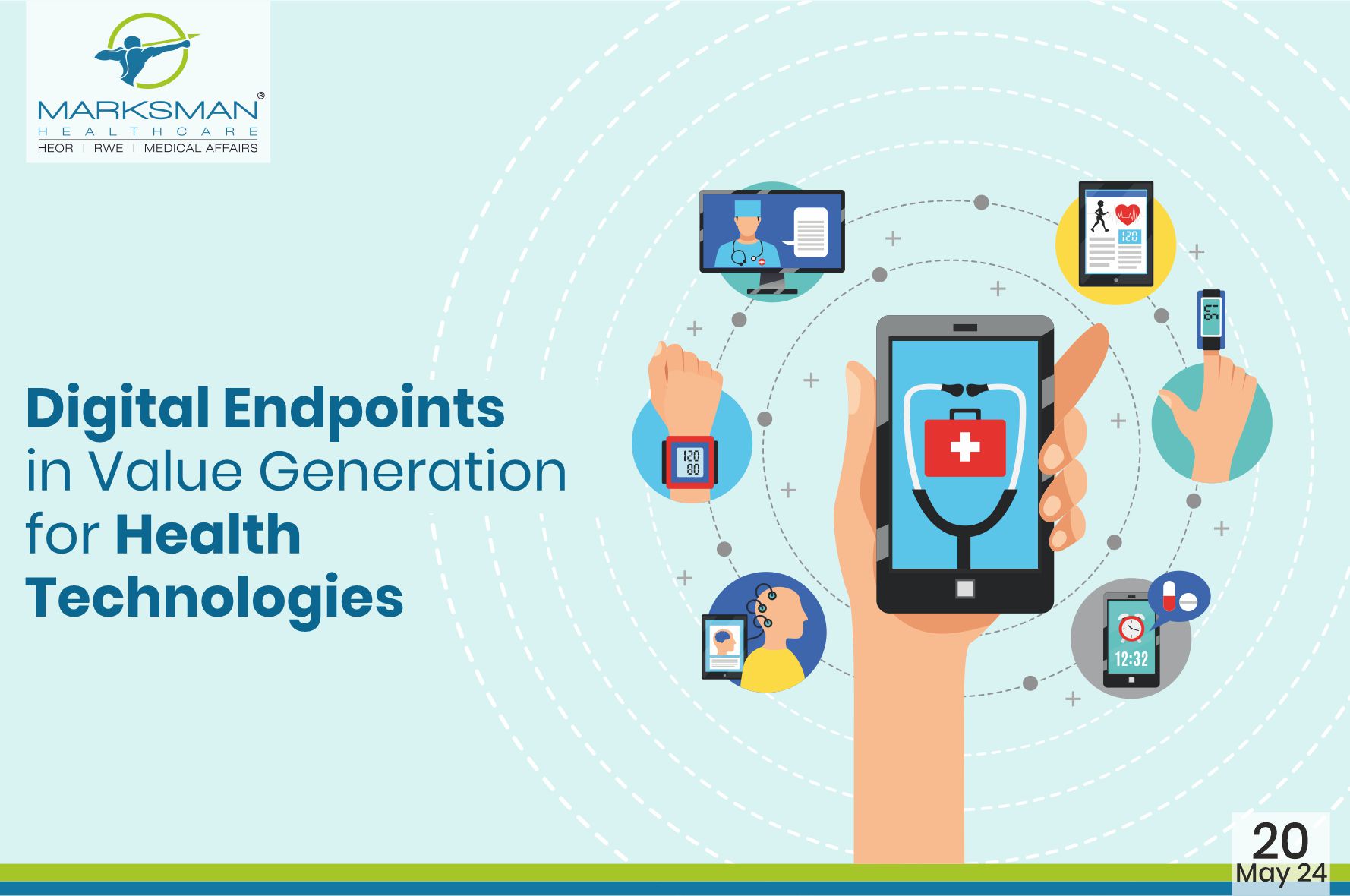

The inception of digital endpoints in clinical trials holds great potential to transform research methodology, which is characterized by easy and perfect data collection. This will increase the development of life-saving therapies, and can also enhance patient engagement. The newly introduced digital endpoints are driven by advancements in technology, including the miniaturization of sensors, enhancement in data analytics, the wider implementation of wearable devices and mobile health applications by patients and healthcare providers.[1]
Digital endpoints are used as essential tools for evaluating the effectiveness and value of novel treatments and interventions. The drawbacks of conventional endpoints may be addressed by digital endpoints, which are characterized by sensor-generated data from locations other than clinical settings. Digital endpoints offer a novel approach to measuring health outcomes, providing a more granular and giving a more detailed and continuous picture of patient health. Traditional clinical endpoints like mortality rates or disease progression markers frequently only offer a glimpse of the state of health at specific points in time. On the other hand, digital endpoints provide an ongoing, real-time data stream that allows for a more sophisticated comprehension of health trajectories and the impact of interventions over time. As a consequence, these digital endpoints can be valuable for both evaluating diseases and the health technology that generates the endpoints.[1,2]
Health technology assessments (HTAs) and clinical trials may gain benefit from the integration of digital endpoints in a number of ways, including better self-management, enhanced patient participation, and improved patient engagement through the provision of real-time health feedback. In addition, eliminating recall bias through continuous evaluation, it enhances the quality of data by facilitating remote, patient-centered data gathering, improving treatment efficacy assessments, and producing more accurate results. Additionally, by facilitating real-time patient regimen monitoring, which enhances outcomes and lowers side effects, digital endpoints promote medication safety and adherence. Furthermore, digital endpoints can drastically reduce the operational costs related to clinical trials and HTAs by automating data collecting and reducing the need for in-person visits.[3,4]
Despite its promise, using digital endpoints presents several difficulties, such as safeguarding data security and privacy, particularly in light of the rise in cyberattacks. Furthermore, it is critical to have standardized and verified procedures to ensure that digital endpoints accurately reflect health outcomes and remain consistent across research. Regulatory approval continues to be a major obstacle, and the relatively low adoption of digital endpoints among large pharmaceutical companies can be attributed to both difficult regulatory constraints and inadequate finance.[5]
Regulatory agencies are working hard to create frameworks for the use of digital endpoints in research and HTA, keeping in mind the potential they provide. A road map for using digital health tools to gather clinical data and identify new endpoints in drug development may be found in the USFDA’s draft guidance on “Digital Health Technologies for Remote Data Acquisition in Clinical Investigations.” Similarly, a framework for using digital technology for data collection and management is established by the EMA’s recommendations on computerized systems and electronic data in clinical trials. Despite the fact that these recommendations open the door to more effective and patient-centric medication development, difficulties still exist. Careful considerations must be given to data privacy and security, standardization and validation of digital endpoints, and overcoming existing regulatory hurdles.[6,7]
To sum up, digital endpoints are a big step forward in determining the value of health innovations. They have the ability to revolutionize our understanding of and ability to enhance health outcomes by providing a more thorough and continuous picture of patient health. To fully realize this promise, the related difficulties must be resolved, and it is imperative that digital endpoints be utilized sensibly and efficiently throughout the healthcare ecosystem.
Become A Certified HEOR Professional – Enrol yourself here!
References
- Landers M, Dorsey R, Saria S. Digital endpoints: definition, benefits, and Current barriers in accelerating development and adoption. Digit Biomarkers. 2021;5(3):216–223. doi:10.1159/000517885
- Clinixir. Unleashing Potential for Digital Endpoints: How They Can Revolutionize Clinical Research [Internet]. Available from: https://www.clinixir.com/blog/unleashing-potential-for-digital-endpoints-how-they-can-revolutionize-clinical-research/
- Bian S, Zhu B, Rong G, et al. Towards wearable and implantable continuous drug monitoring: a review. J Pharm Anal. 2021;11(1):1–14. doi: 10.1016/j.jpha.2020.08.001
- Al Meslamani AZ. The long-term clinical impact of digital endpoints and biomarkers in data collection. Expert Rev Pharmacoecon Outcomes Res. 2024;1–3. doi:10.1080/14737167.2024.2320233
- Breaking the mold: How digital endpoints could transform clinical trials [Internet]. Available from: https://www.aissel.com/blog/how-digital-endpoints-could-transform-clinical-trials
- Current references on clinical endpoints derived from Digital Health Technologies [Internet]. Available from: https://www.efpia.eu/media/676660/efpia-digital-endpoints-reference-documents.pdf
- Guideline on computerised systems and electronic data in clinical trials [Internet]. Available from: https://www.ema.europa.eu/en/documents/regulatory-procedural-guideline/guideline-computerised-systems-and-electronic-data-clinical-trials_en.pdf

 Randomized controlled trials (RCTs) are the mainstay of clinical research; it is estimated that about 18,000 RCTs are published each year. However, traditional RCTs usually take a long time to complete, are expensive, and the results are challenging to generalize to the real-world since they are derived under ideal conditions with strict inclusion and exclusion criteria. This brings in an additional layer of complexity for decision-making by the healthcare stakeholders and reimbursement authorities. With an intention to resolve this challenge, fuelled by the increasing global shift towards personalized medicine and value-based payment models, new methods for generating efficacy and safety evidence of interventions in real-world settings are continuously sought after.[1,2]
 A patient registry has been defined as “an organized system that uses observational study methods to collect uniform data (clinical and other) to evaluate specified outcomes for a population defined by a particular disease, condition or exposure, and that serves a predetermined scientific, clinical or policy purpose.”(1) Patient registries provide an infrastructure for the standardized recording of data from routine clinical practice on individual patients classified by a characteristic or an event. These may include the diagnosis of a disease (disease registry), the occurrence of a condition (e.g., pregnancy registry), a birth defect (e.g., birth defect registry), a molecular or genomic or any other patient characteristics, or an encounter with particular healthcare service.(2, 3)
 There are humungous quantities of data existing in healthcare; data from all kinds of sources, such as clinical, patient, payer, R&D, pharmacy as well as revolutionary technologies that are being quickly embraced, for e.g. data from wearable devices. According to a report by International Data Corporation (IDC), (1) the volume of healthcare data which was observed to be around 153 exabytes in 2013 is estimated to reach around 2,314 exabytes in the year 2020. Therefore, integrating data from all types of diverse sources and clinical systems is a fundamental challenge for any healthcare entity in order to enhance patient care and performance indicators. (2)
 In recent years, patient-centric initiatives are becoming key factors among healthcare companies, as they are increasingly becoming aware of the fact that the key to growing business and improving customer health is to better focus on the needs and concerns of the patient, rather than attending to just the product approval. The objective behind patient-centric drug development and other associated initiatives is to involve patients and the healthcare community as partners in order to bring about a sense of ownership in the success of new medical treatments. (1,2) There are four core principles that frame the growing arsenal of patient centric initiatives: (3)
 The healthcare industry is challenged with administrative and regulatory intricacies that make achieving the healthcare objectives, such as better patient outcomes and reduced costs, difficult. Difficulties faced while improving patient outcomes are predominantly taxing, since health systems measure and report thousands of outcomes annually. (1) In addition, healthcare industry is saturated with the need for improved quality and safety programs. (2) Quality healthcare refers to “the degree to which health services for individuals and populations increase the likelihood of desired health outcomes and are consistent with current professional knowledge”. (3)