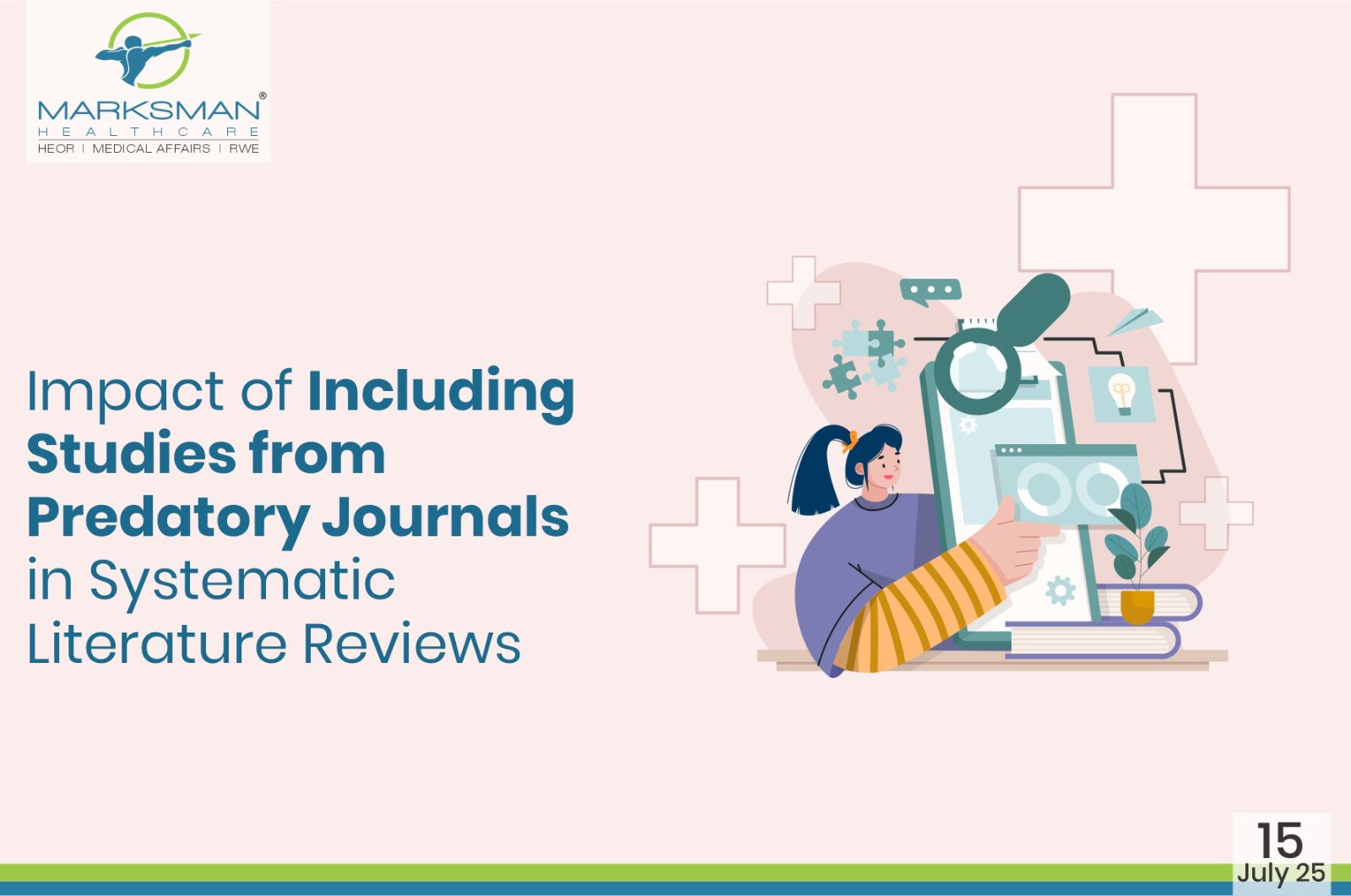

Systematic reviews are the foundation of evidence-based practice; trusted by clinicians, policymakers, and researchers to inform healthcare decisions and policies. Their reliability depends on the robust and unbiased study selection, ensuring the representation of highest standards of scientific review while publishing the final synthesized evidence. However, with the rapidly expanding open-access publishing, the academia is increasingly encountering the challenge of predatory journals, which are publications that purport to be authentic academic channels but lack transparent peer review, editorial supervision, and publication ethics.(1) This can substantially threaten the validity of systematic reviews that include these studies; thereby hampering the quality of evidence that guides policy decisions and practice.(2-4)
Including studies from predatory journals for systematic reviews severely jeopardizes the integrity of the end results. Predatory journals typically accept manuscripts with nominal or no peer review instead of article processing fees. Consequently, they may publish poorly designed, practically unsound, or even forged research. If such studies are incorporated into a systematic review, particularly when not marked or critically evaluated, they can cause significant bias, twist effect estimates, and weaken the evidence quality overall. This is especially dangerous in clinical settings, where recommendations based on counterfeited evidence could mislead treatment decisions or health interventions.(2-4)
These concerns are augmented with the difficulty of detecting predatory journals, because many have misleadingly professional websites, impressive-looking editorial boards, and titles similar to those of respectable journals. They are increasingly indexed in disputed databases and may even show up in search results on platforms, such as Google Scholar.(2) In case of fast-paced or resource-limited reviews, particularly in low- and middle-income countries, reviewers may unintentionally incorporate articles from such journals without a detailed scrutiny, especially if the review does not use journal quality filters or assess the transparency of peer review.(2-5)
Researchers are making efforts to address this challenge. Checklists, including those designed by the Think. Check. Submit. campaign,(6) and blacklists like Beall’s list (no longer operational but archived) (7) or Cabells Predatory Reports,(8) are instruments for reviewers to screen sources. However, ultimately, it all comes down to the robustness of the systematic review protocols to include specific exclusion criteria for predatory journals by means of rigorous use of quality appraisal tools. Review teams must also be well-equipped to identify red flags and make decisions if in case of a doubtful validity of a particular source.(1, 2, 5)
In conclusion, including articles from predatory journals in systematic reviews hampers academic integrity and weakens the trust in science; thereby jeopardizing clinical decisions. Robust vigilance, transparency, and compliance with stringent methodological standards are indispensable to maintain the evidence base of systematic reviews.
Become A Certified HEOR Professional – Enrol yourself here!
References
- Elmore SA, Weston EH. Predatory Journals: What They Are and How to Avoid Them. Toxicol Pathol. 2020; 48(4):607-610.
- Munn Z, Barker T, Stern C, et al. Should I include studies from “predatory” journals in a systematic review? Interim guidance for systematic reviewers. JBI Evid Synth. 2021; 19(8):1915-1923.
- Rice DB, Skidmore B, Cobey KD. Dealing with predatory journal articles captured in systematic reviews. Syst Rev. 2021 Jun 11;10(1):175.
- Pollock D, Barker TH, Stone JC, Aet al. Predatory journals and their practices present a conundrum for systematic reviewers and evidence synthesisers of health research: A qualitative descriptive study. Res Synth Methods. 2024; 15(2):257-274.
- Ross-White A, Godfrey CM, Sears KA, Wilson R. Predatory publications in evidence syntheses. J Med Libr Assoc. 2019; 107(1):57-61.
- Check. Submit. [Accessed online on 9th July 2025]. Available from: https://thinkchecksubmit.org
- Beall J. Criteria for Determining Predatory Open-Access Publishers. [Accessed online on 9th July 2025]. Available from: https://beallslist.weebly.com/uploads/3/0/9/5/30958339/criteria-2015.pdf
- Cabells Predatory Reports. [Accessed online on 9th July 2025]. Available from: https://cabells.com/solutions/predatory-reports